Lupang
Pinagpala
Agroforestry, Inc.
A Diana Nieva & Leticia Dexter
Legacy Foundation
A day on the blessed land: from the first cup of calamansi at the gate to the last candle at the dinner table.
Come walk the land with me
Aunties, put on comfortable shoes. Today you are our very first guests.
As your Director of Marketing & Guest Experience, my job is to describe what a visitor will feel at Lupang Pinagpala, from the moment their car turns off the road to the moment they drive home with a bag of pili and a head full of stories. So let me take you through the day itself, hour by hour, the way our guests will live it.
We’ll follow the same path our guests will follow: the flowering walk, the nursery, the pond, the orchards, the agarwood groves, the native forest, the bamboo and the roses. We’ll stop for brunch in the garden and stay for a six-course dinner as the lanterns come on at Leticia’s Kitchen.
At every stop I’ll tell you what you’re looking at, where it comes from, and why growing it here matters. Several of these plants are rare in the wild today. On this farm, they get a second home.
With aloha and gratitude,
Director of Marketing & Guest Experience
Sunrise to candlelight
One long loop through ten garden and forest zones, two meals at Leticia’s Kitchen and a stop at Diana’s Pasalubong Shop. Guests move at an easy pace with a guide, plenty of shade and a place to sit at every turn.
Arrival & plant shop
A cold calamansi welcome and the day’s map.
The flowering tunnel
Walking beneath turquoise jade vine.
Sister Diana’s Orchid House
Meeting the Queen of Philippine orchids.
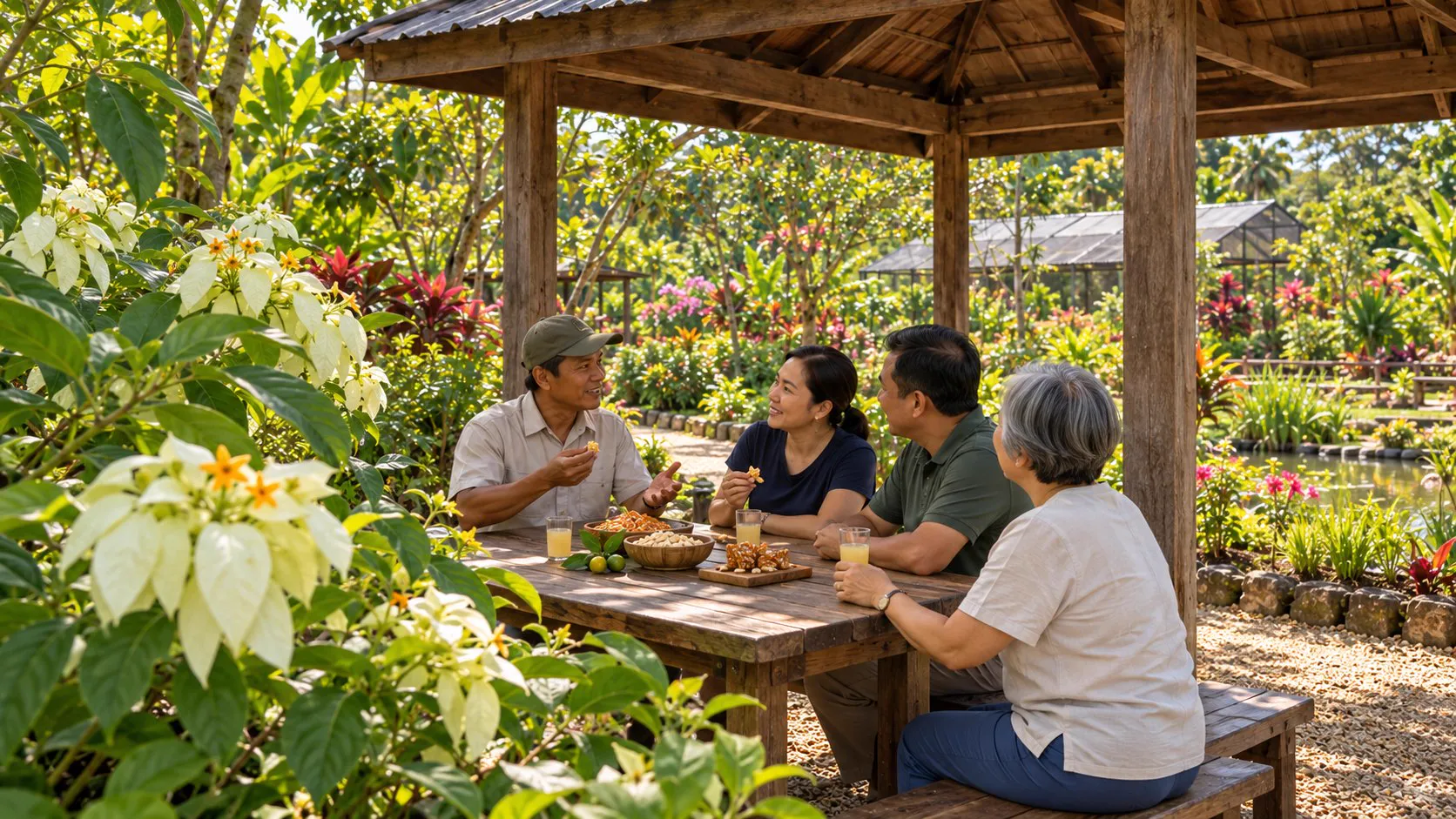
Picnic garden
Merienda among white mussaenda.
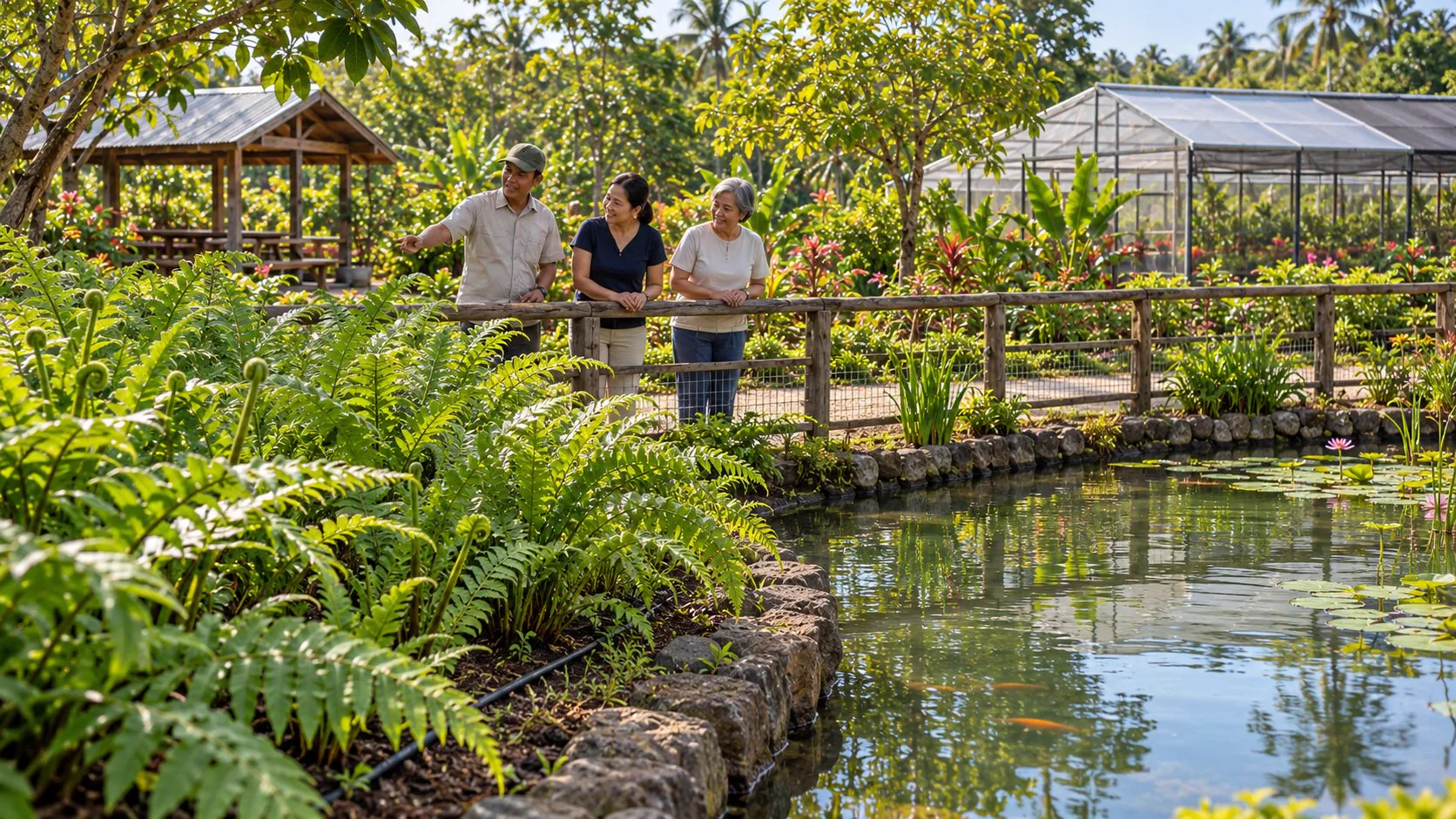
Fish pond & ferns
Tilapia, dragonflies and pako fronds.
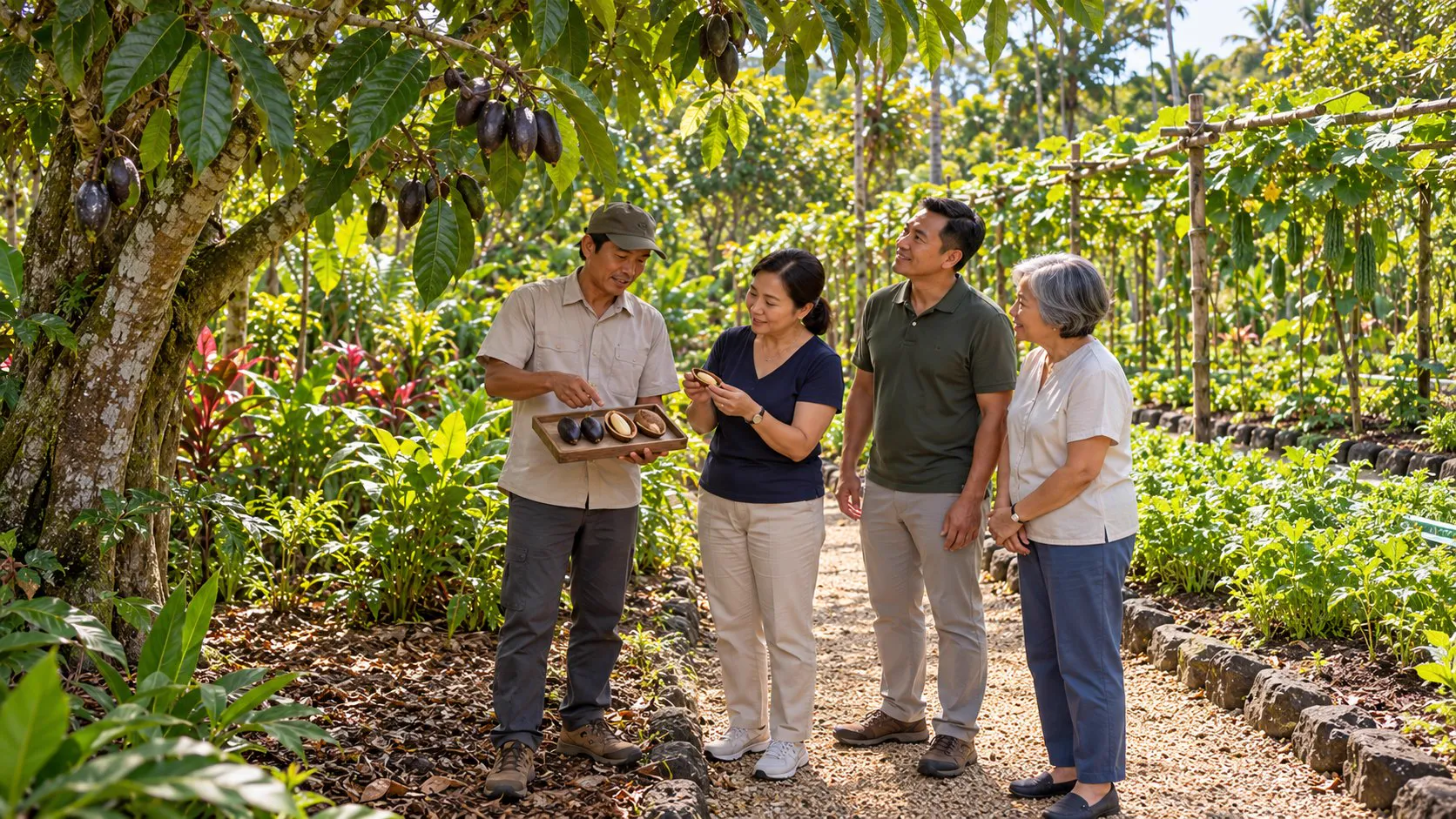
Orchards & food alleys
Cracking a pili nut fresh from the tree.
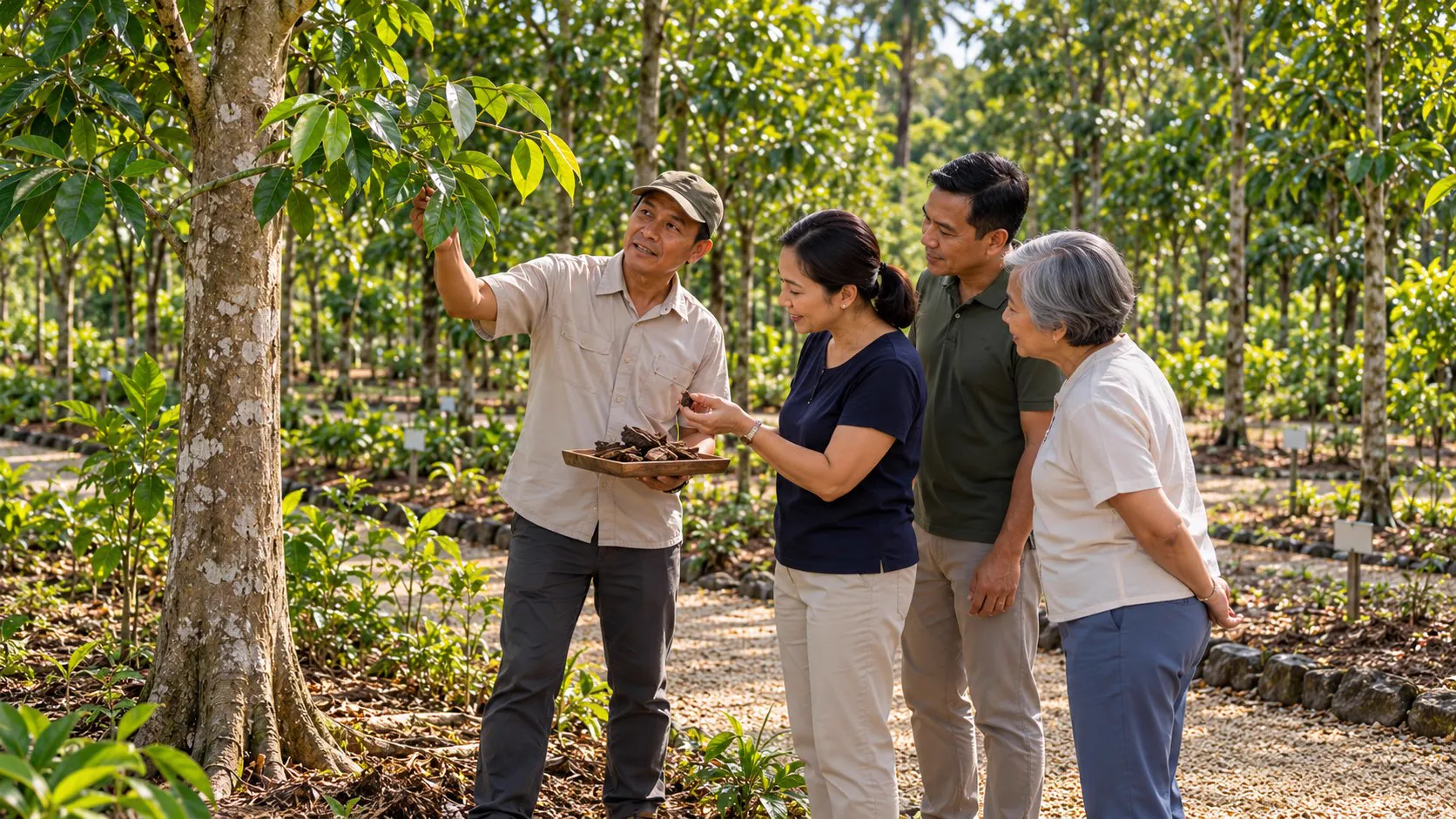
Agarwood groves
The story of the world’s most precious wood.
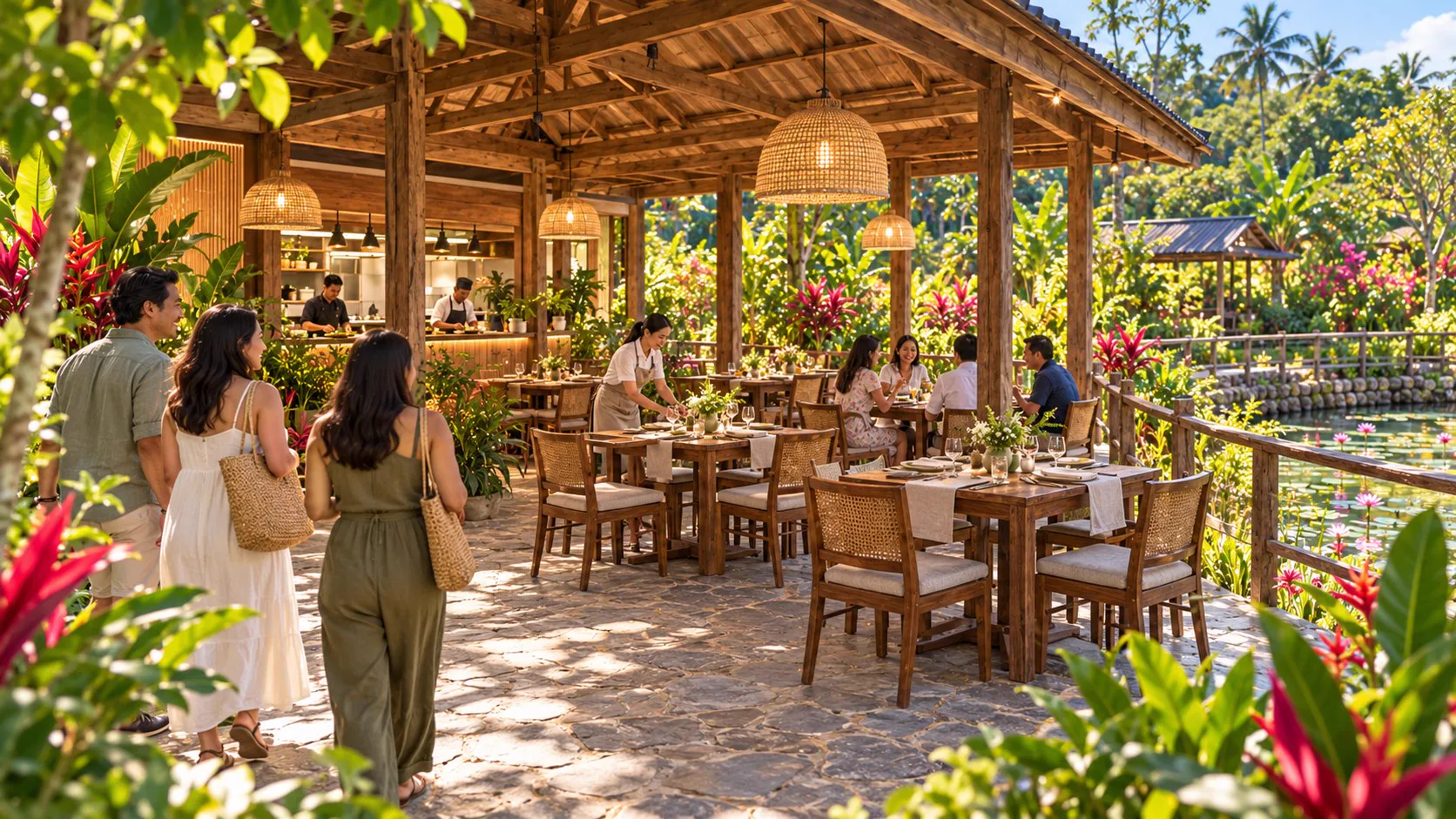
Brunch at Leticia’s Kitchen
A long, unhurried meal from the farm.

Native woodland
Under the crown of the national tree.
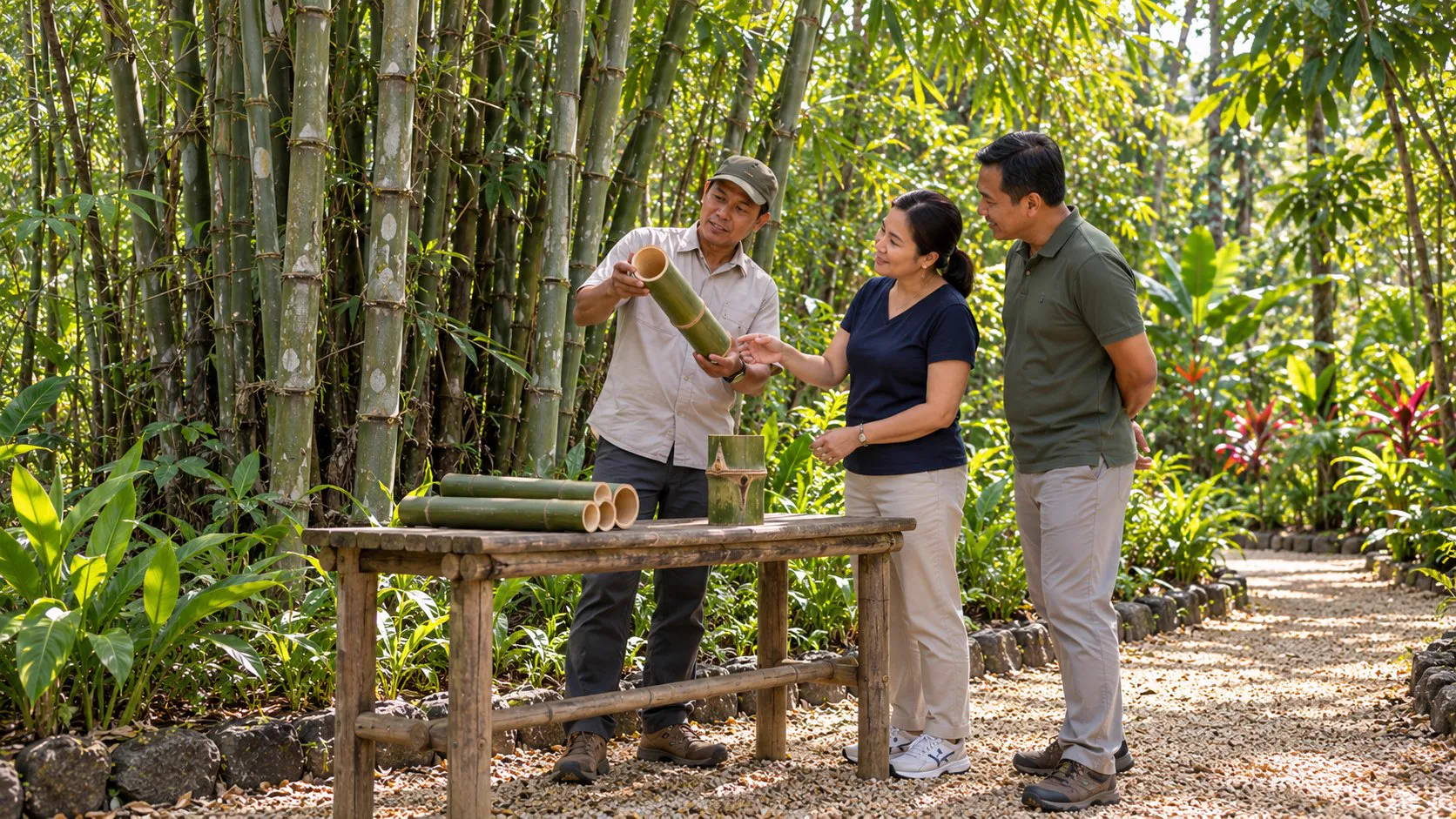
Bamboo grove
A building material that shoots up in one season.
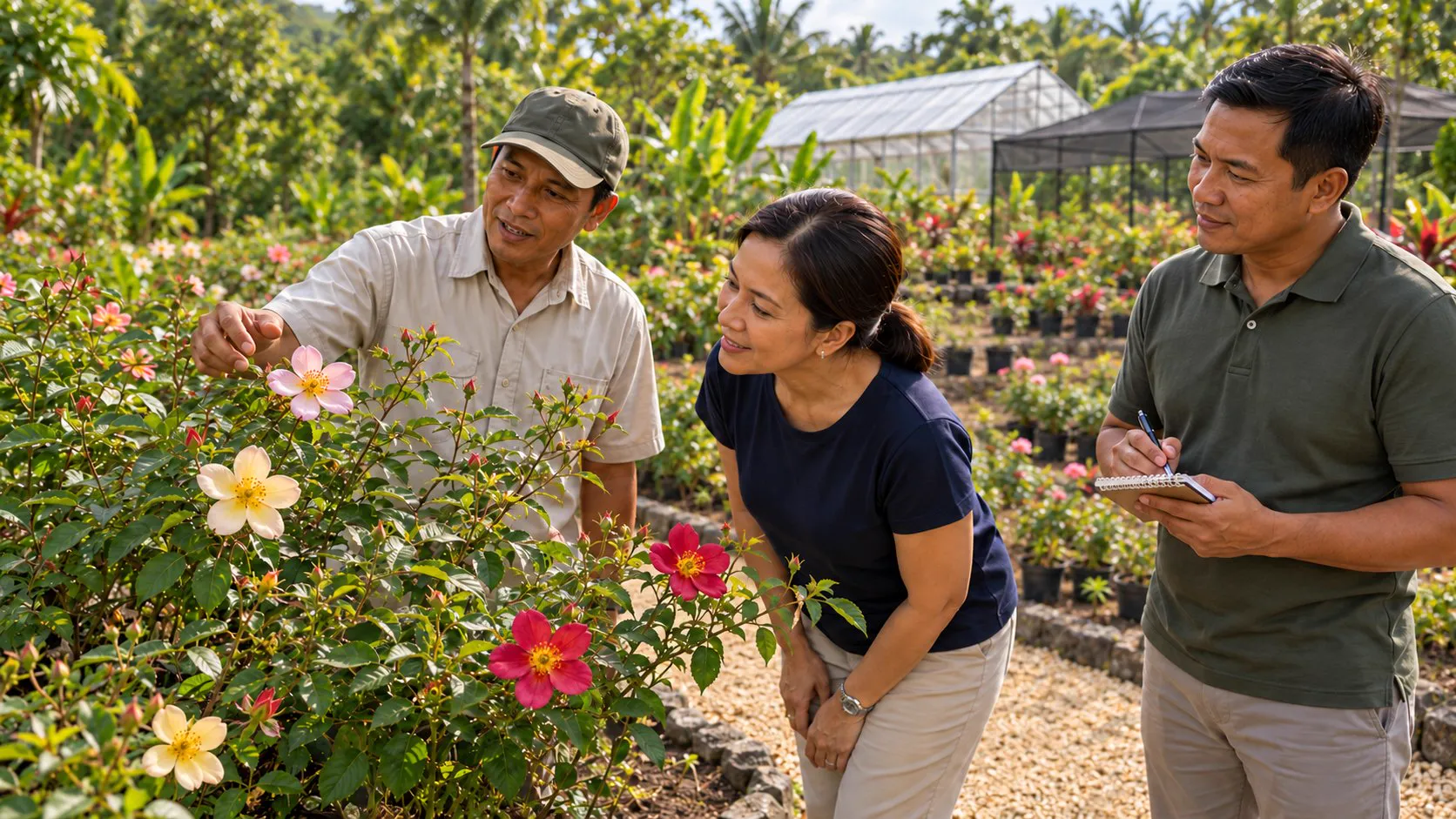
Roses & botanical trials
Leticia’s rose garden in full bloom.

Diana’s Pasalubong Shop
Pili, ube and orchids to bring home.

Golden hour
Leticia’s Calamansi Margarita by the pond.
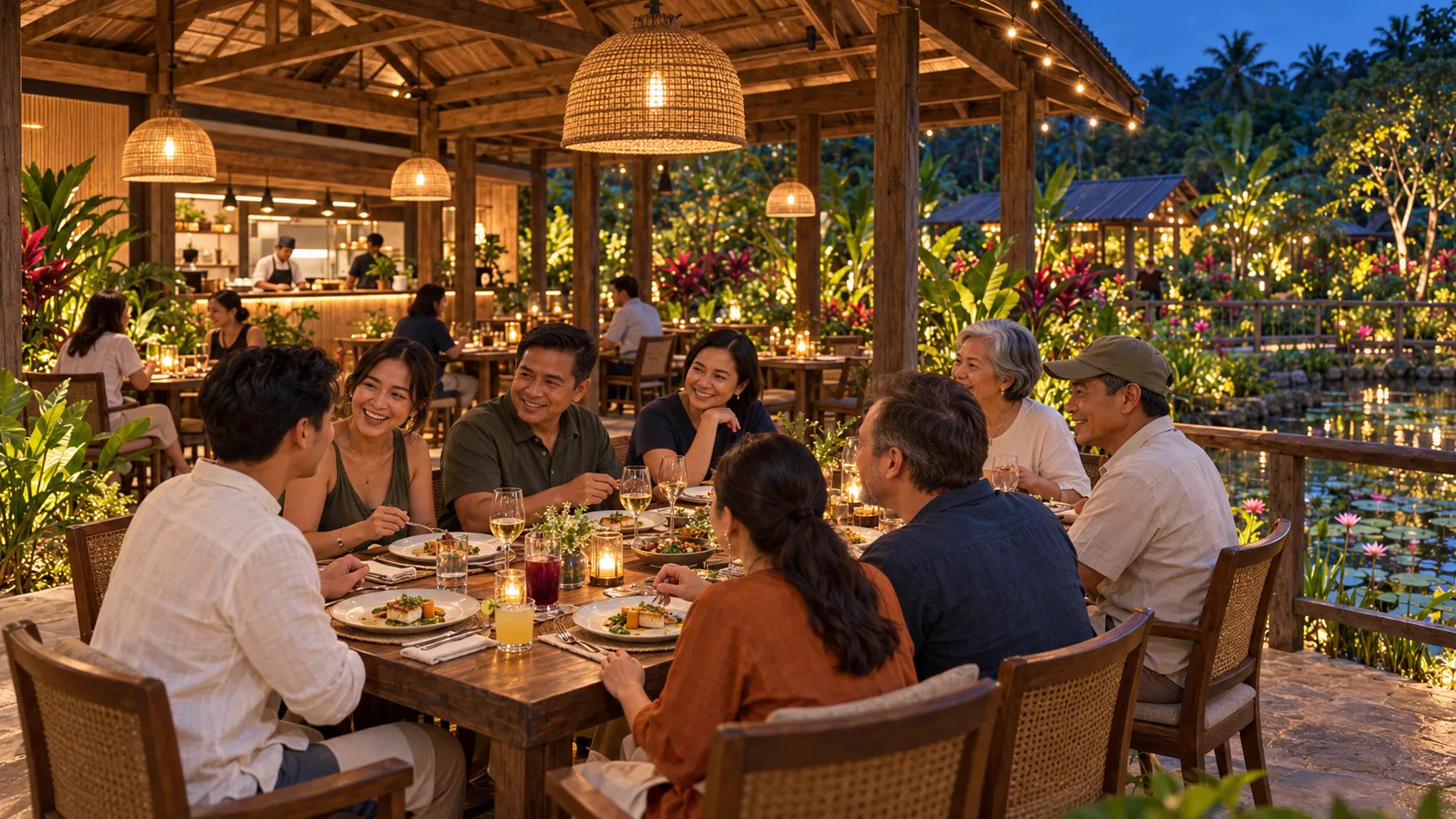
The six-course table
Dinner from the pond, garden and orchard.
Farewell
Home with full hearts and a bag of pili.

The Blessed Land
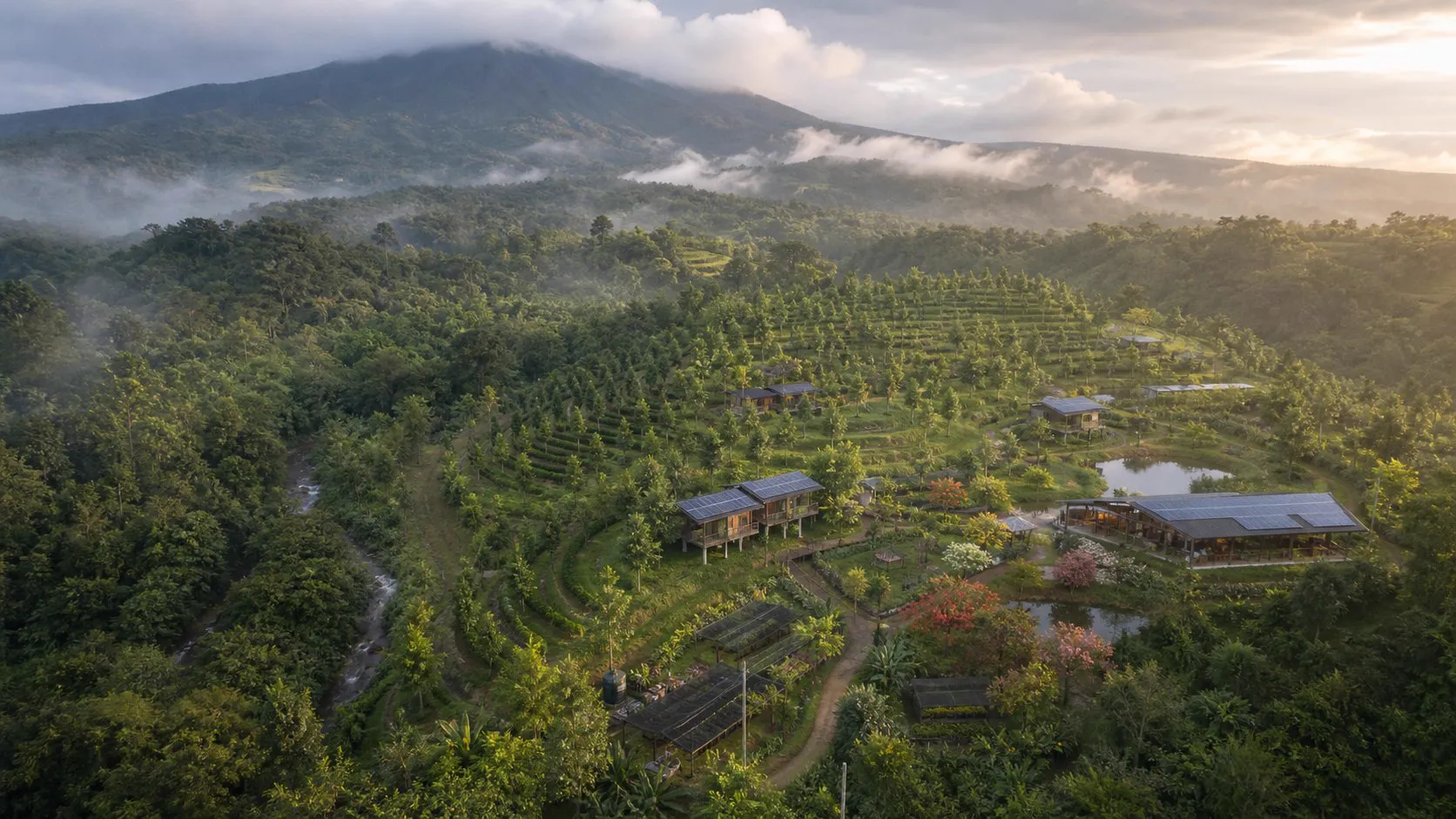
Our story begins in the green foothills of Tayabas City, Quezon, where Mount Banahaw rises over the treetops and morning mist settles in the valleys. The fine white line traces Lot 2782: about 28 hectares of rolling, wooded country, with a creek and an irrigation line running along its southern edge.
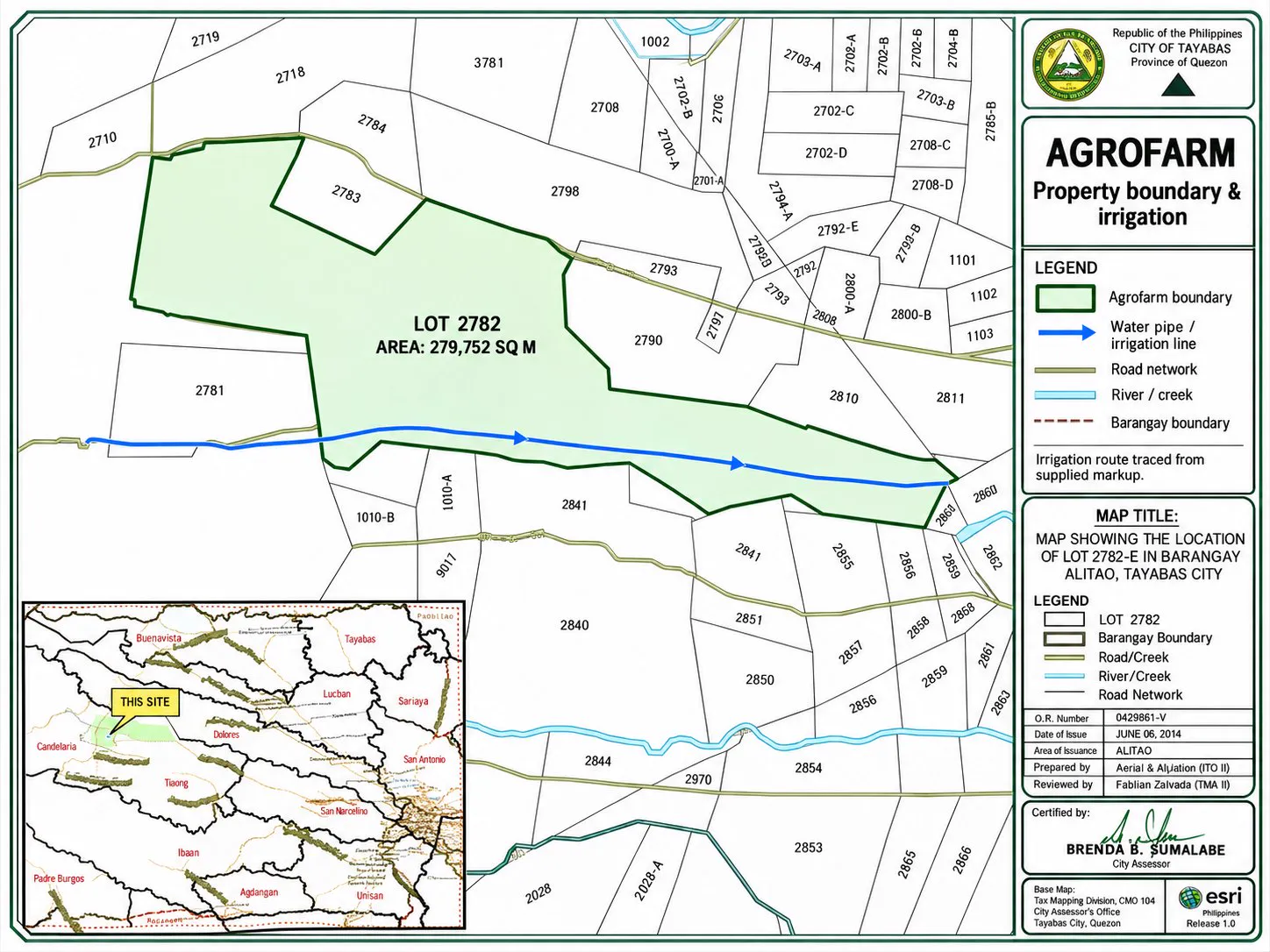

Lot 2782, Tayabas City
279,752 square meters of Quezon countryside, mapped by the City Assessor and ready for its next chapter.
Tayabas carries more than four centuries of history. It was laid out by Franciscan friars who arrived in 1578, the same Franciscan family Sister Diana would serve for twenty-two years. Its stone basilica is built in the shape of a key, the Susi ng Tayabas, and every May the town celebrates the Mayohan for San Isidro Labrador, patron of farmers, when families shower the procession with suman rice cakes from their windows. Catch one, the saying goes, and your harvest will be generous.
The farm sits in Barangay Alitao, right beside the town center. The long, narrow arm of the property runs east toward the public road; the broad western body opens into rolling ground for the orchards, groves and forest. A water line runs the length of the land.
Mount Banahaw rises 2,170 meters over Tayabas, the highest peak in the region and a holy mountain to generations of pilgrims. Its rainforest, protected since 2009 as the Mounts Banahaw–San Cristobal Protected Landscape, is the watershed that feeds the rivers and streams of Tayabas.

Ten zones, one walk
Guests enter at the east gate and follow a flowering promenade into the heart of the farm, then loop through orchards, groves and forest. Service vehicles use their own lane, so the garden path stays quiet and green.
- 01Arrival & plant shop · welcome, parking and Diana’s shop
- 06Orchards & food alleys · sunlit crop groups
- 02Flowering tunnel · the pedestrian garden walk
- 07Agarwood groves · two treasured species
- 03Sister Diana’s Orchid House · greenhouse and nursery
- 08Native woodland · permanent tree collection
- 04Picnic & display garden · food, shade and flowers
- 09Bamboo grove · living building material
- 05Fish pond & fern garden · the water garden
- 10Rose & botanical trials · Leticia’s roses and garden discoveries

The farm in full bloom
Imagine flying over Lupang Pinagpala once its trees have grown tall.
At the lower right, cars rest in the shaded parking court beside the welcome shelter. From there a ribbon of flowers runs west: timber arbors draped in jade vine, pockets of orchids, the glint of the greenhouse roof. The little pond catches the sky below the nursery, and the picnic pavilion sits where the paths meet.
Beyond, the land turns to working forest: rows of fruit and nut trees, two agarwood groves, a native woodland in the upper middle and a bamboo stand at the far western edge. It is a farm, a botanical garden and a classroom, all in one walk.

Morning on the
Flowering Walk
The air is cool, the leaves still hold last night’s dew, and birdsong fills the trees. This is the best hour to arrive. Our first five stops lead from the gate, beneath the flowers, through the nursery and down to the water.
Your visit begins here
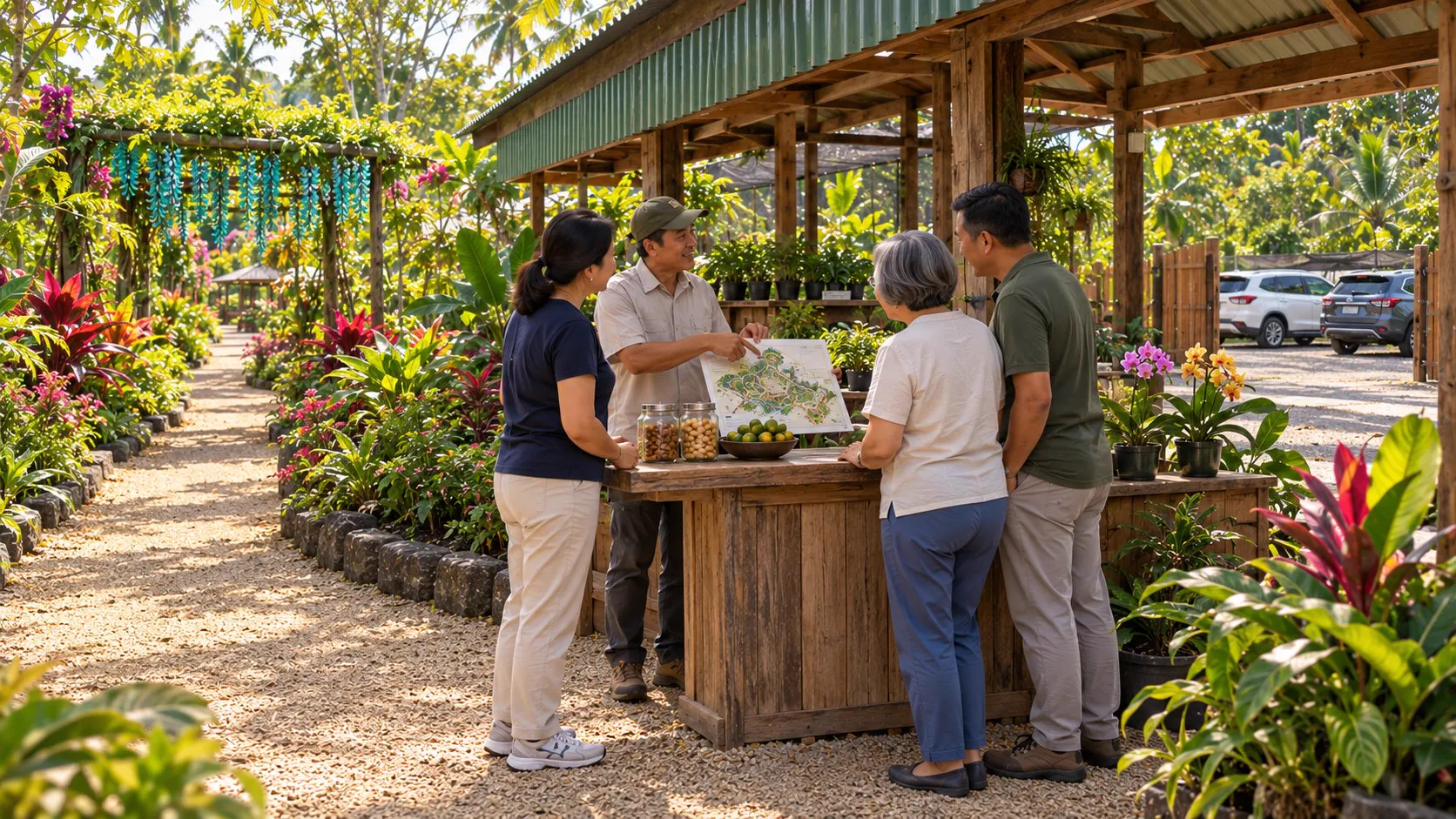
The car door closes and the first thing you notice is the quiet. Then the morning fills in around you: birdsong from the canopy, a rooster somewhere down the valley, gravel crunching softly underfoot. Under the green roof of the welcome shelter, your guide unrolls a hand-painted map and traces the day’s route with one finger.
On the counter sit a bowl of bright calamansi, jars of roasted pili and potted orchids raised in our own nursery. Before you take a step down the path, someone places a cold calamansi cooler in your hand.
Which plant will you recognize again when you come back to the shop at the end of the day?
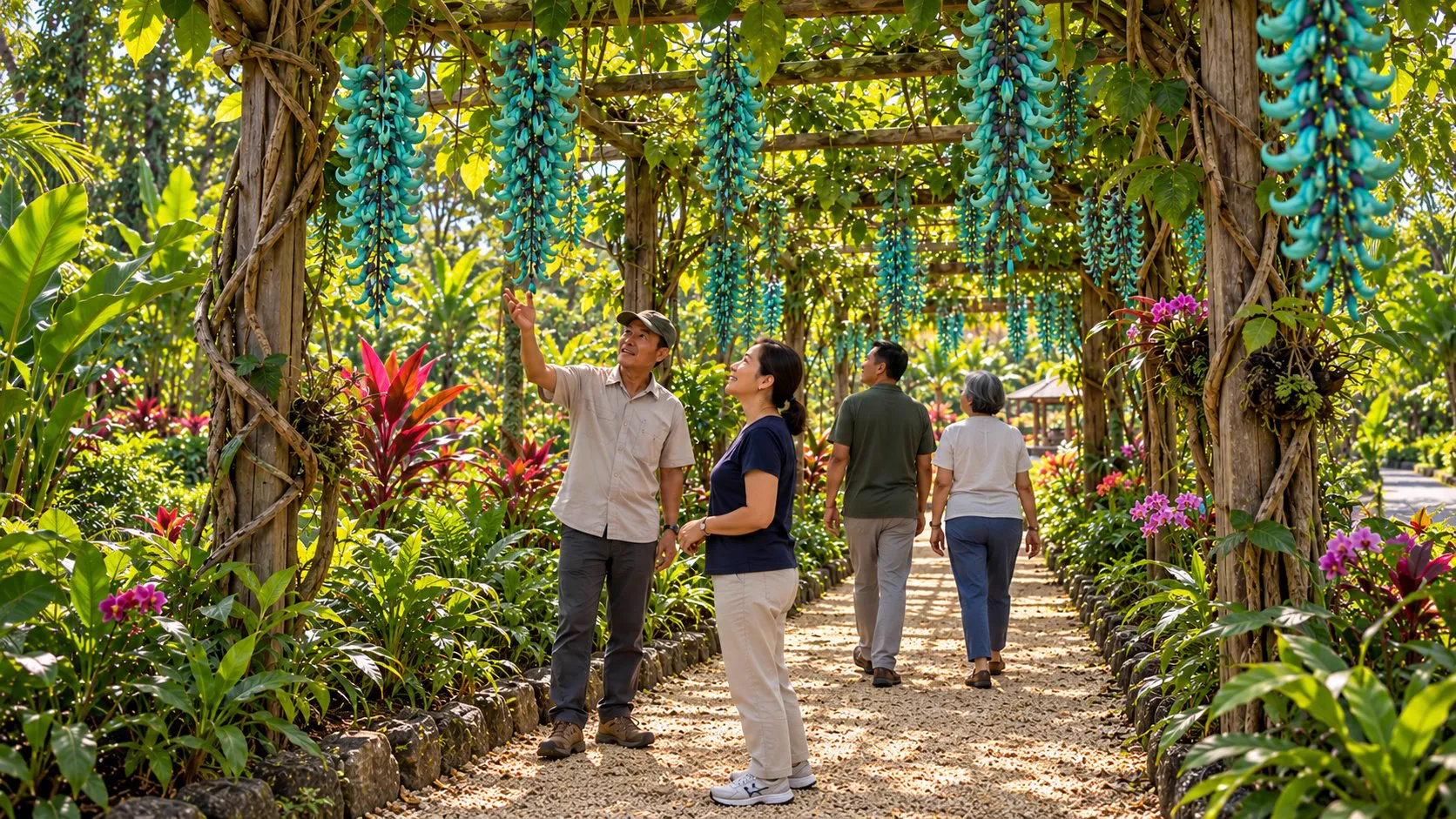
Look up beneath the jade vine
Hanging above you are flowers in a color found almost nowhere else in nature.
This is tayabak, the jade vine, Strongylodon macrobotrys. Its hanging clusters can reach three meters, carrying hundreds of claw-shaped blossoms the color of sea glass. It grows wild only in the rainforests of Luzon, Mindoro and Catanduanes, and you carry its picture in your pocket: the tayabak is on the back of the Philippine five-peso coin.
Its secret is the night shift. The flowers are built for bats, which hang upside down to drink the nectar and carry pollen on their heads from vine to vine. Here, each vine climbs its own timber arbor, so the blooms hang low enough to fill your view.
Philippine endemicThreatened in the wild
As its rainforest home shrinks, the jade vine needs gardens. Seeds are scarce and short-lived, so farms like ours keep vines from several parent lines, hand-pollinate them the way a bat would, and share cuttings with other growers.
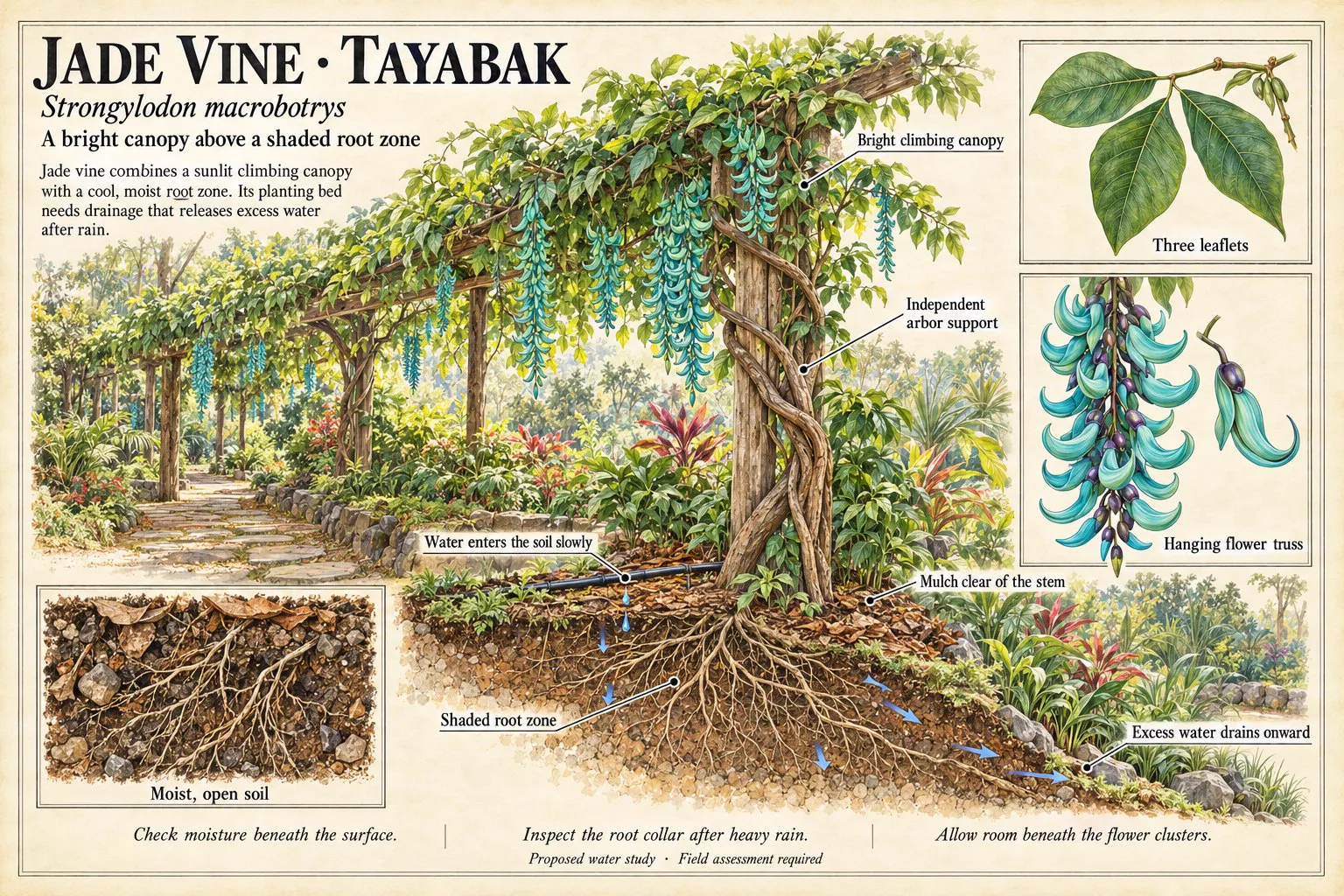
Sun above, shade below
Every signature plant on the farm has its own care study. This one shows how we grow jade vine: a bright canopy for the flowers and a cool, shaded root zone in moist soil that drains freely after rain.
The arbor stands on its own posts, built to carry the weight of a mature vine. Mulch keeps the roots cool. Guides use plates like this to show guests that a beautiful garden starts underground.
Guests leave knowing three things to check on any climbing plant: what holds it up, where its roots drink, and where the water goes after a storm.
The Queen of Philippine orchids
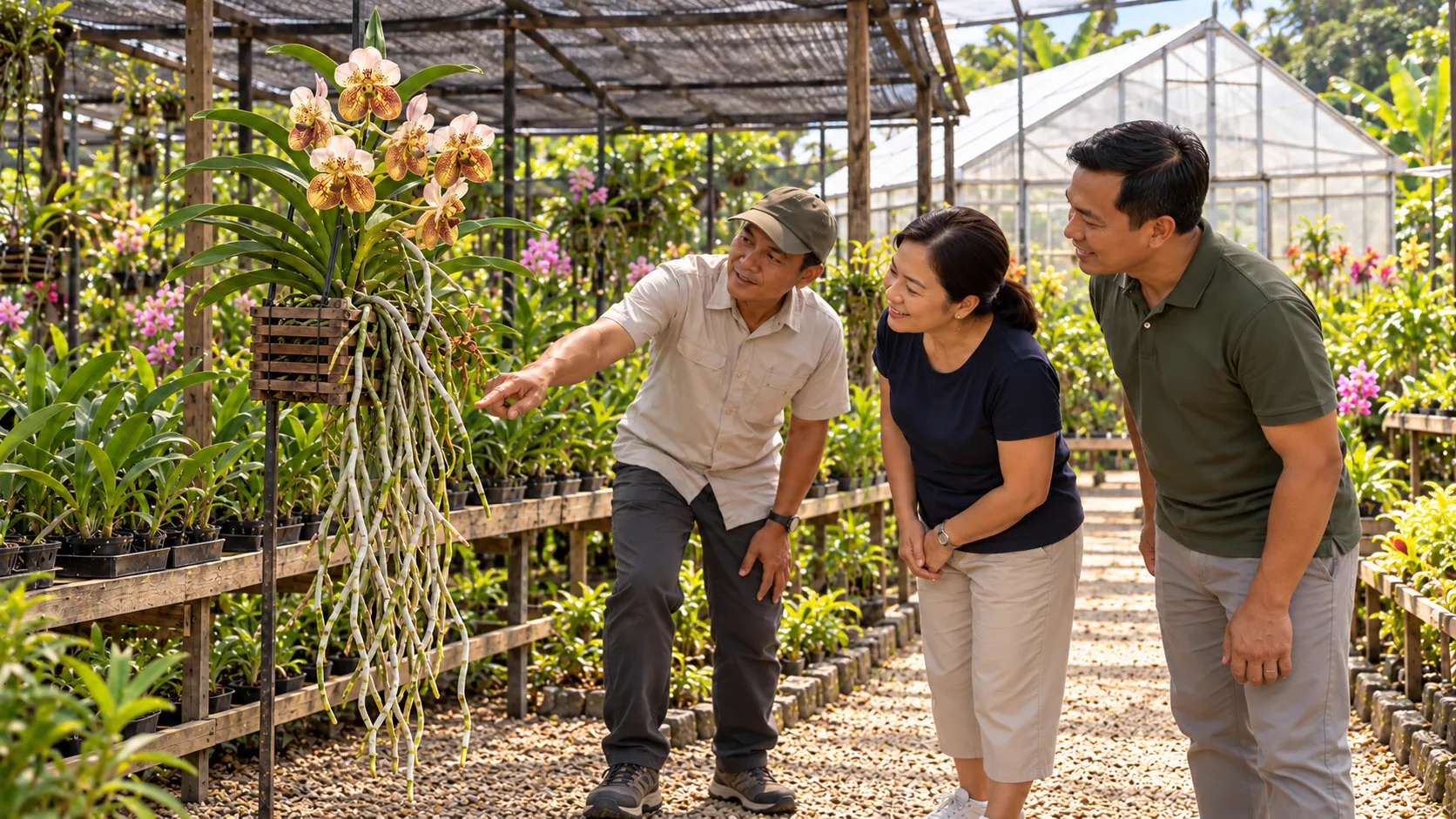
Welcome to Sister Diana’s Orchid House, named for Sister Diana Nieva, who spent a lifetime helping others grow. Inside, the light turns soft and green.
Your guide lifts a wooden basket and points past the flowers to the roots: long, silver-green and hanging free. This is waling-waling, Vanda sanderiana, whose blooms grow up to 12 centimeters across, the largest of any Philippine orchid.
It grows wild only in Mindanao, high on the trunks of rainforest trees. In the early 1880s a plant hunter working for the English nurseryman Frederick Sander heard stories of an orchid with flowers “as big as dishpans,” and when it bloomed in England in 1882 it was named in Sander’s honor. In Bagobo lore from Mindanao, it is honored as a diwata, a spirit of the forest.
Critically Endangered · DENR 2017 listCITES Appendix II
Rare in the wild today, the Queen is on her way back. Since 1985, when Davao grower Charita Puentespina pioneered raising it by the thousands in the lab, nursery seedlings have returned it to Filipino gardens.

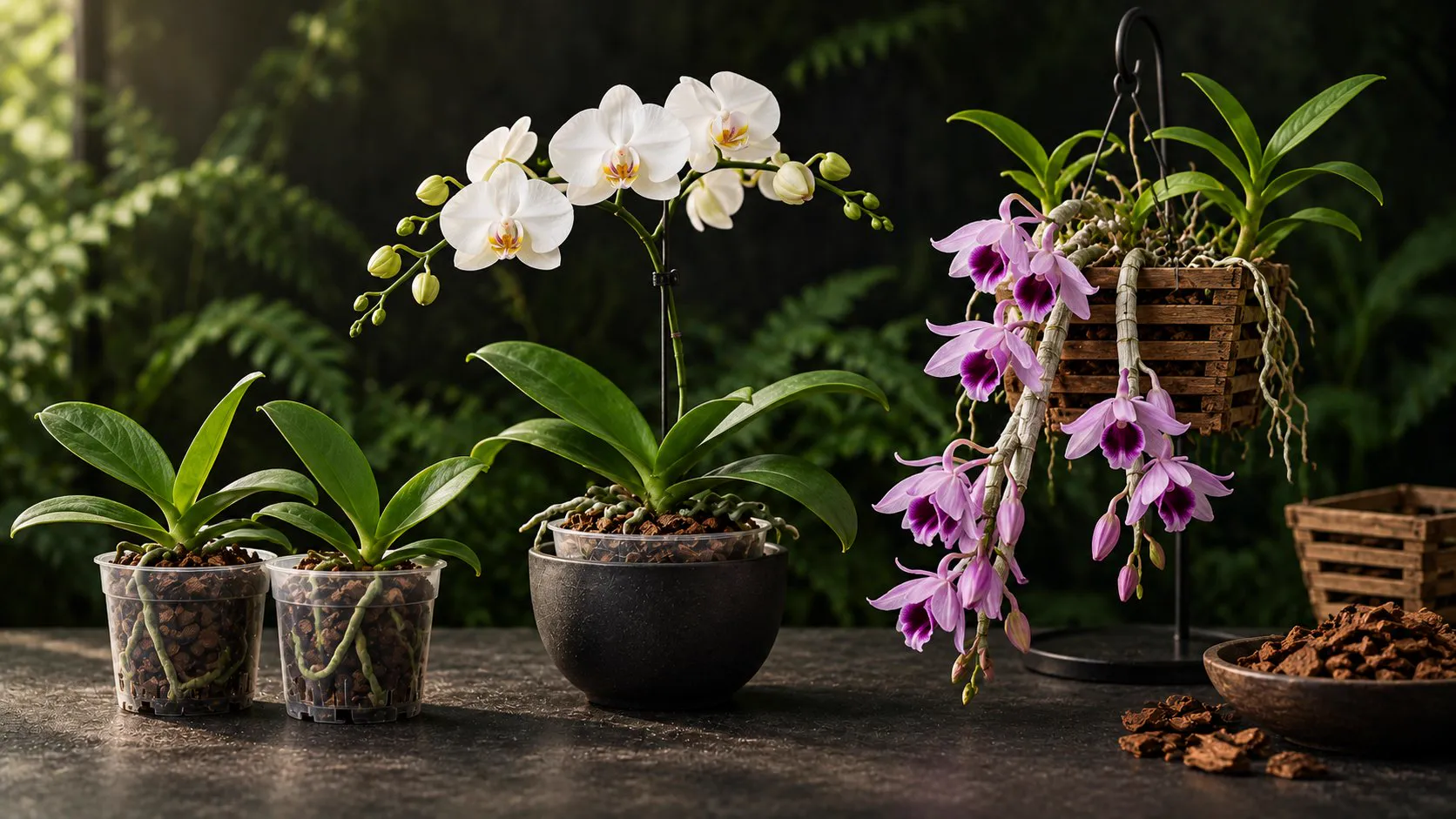
Roots tell the story
Waling-waling grows on tree branches in the wild, so its roots drink from rain and breathe in moving air. In the nursery we water deeply, let the roots dry, and read their color: silver when thirsty, green when full.
Orchid lovers can take that lesson home. Diana’s Pasalubong Shop offers young nursery-grown waling-waling, the white Philippine moth orchid called mariposa, and sanggumay, whose purple blooms smell like raspberry candy, each one raised here from documented stock.
A single waling-waling seed pod holds about 10,000 dust-fine seeds. In the forest only a lucky few sprout; in a sterile flask, many do. Every nursery-grown orchid that goes home helps keep a wild one on its tree.
A table among the flowers
Time for merienda, the Filipino mid-morning snack.
Under the open timber pavilion, the guide sets out small plates of roasted pili and glasses of calamansi juice. Beside the table a shrub glows white in the sun. Look closely: those big white “petals” are actually enlarged sepals, and the true flowers are the tiny orange-yellow stars in the middle.
This is the Philippine mussaenda, and this snowy form is Doña Aurora. It appeared as a natural sport on Mount Makiling in 1915 and was named in 1938 for First Lady Aurora Aragon Quezon, who was born in Baler, the Pacific-coast town that became part of Tayabas Province. It became the parent of a whole family of Filipino-bred “Doñas” named for First Ladies. A flower named for a daughter of Tayabas, blooming back home.
Watch the water, notice the fronds
A dragonfly skims the surface, and a flash of silver turns beneath the lily pads: tilapia, raised in this pond for Leticia’s Kitchen. Along the stone edge grows a bed of pako, Diplazium esculentum, the edible fern Filipinos have gathered beside streams for generations. Its coiled young tips are the star of ensaladang pako, and tonight they return to you, warm and glossy, in the second course at dinner.
The pond and garden work as a team. Nutrient-rich pond water irrigates the greens along its banks, and pond mud enriches the beds, so the same small corner of land grows both fish and vegetables. Pako loves exactly this spot: moist, shady ground beside water.
The Working
Forest
The path leaves the flower garden and steps into the sun. Here the farm gets to work: rows of fruit and nut trees, food growing in the alleys between them, and then the quiet groves of agarwood that gave this whole venture its start.
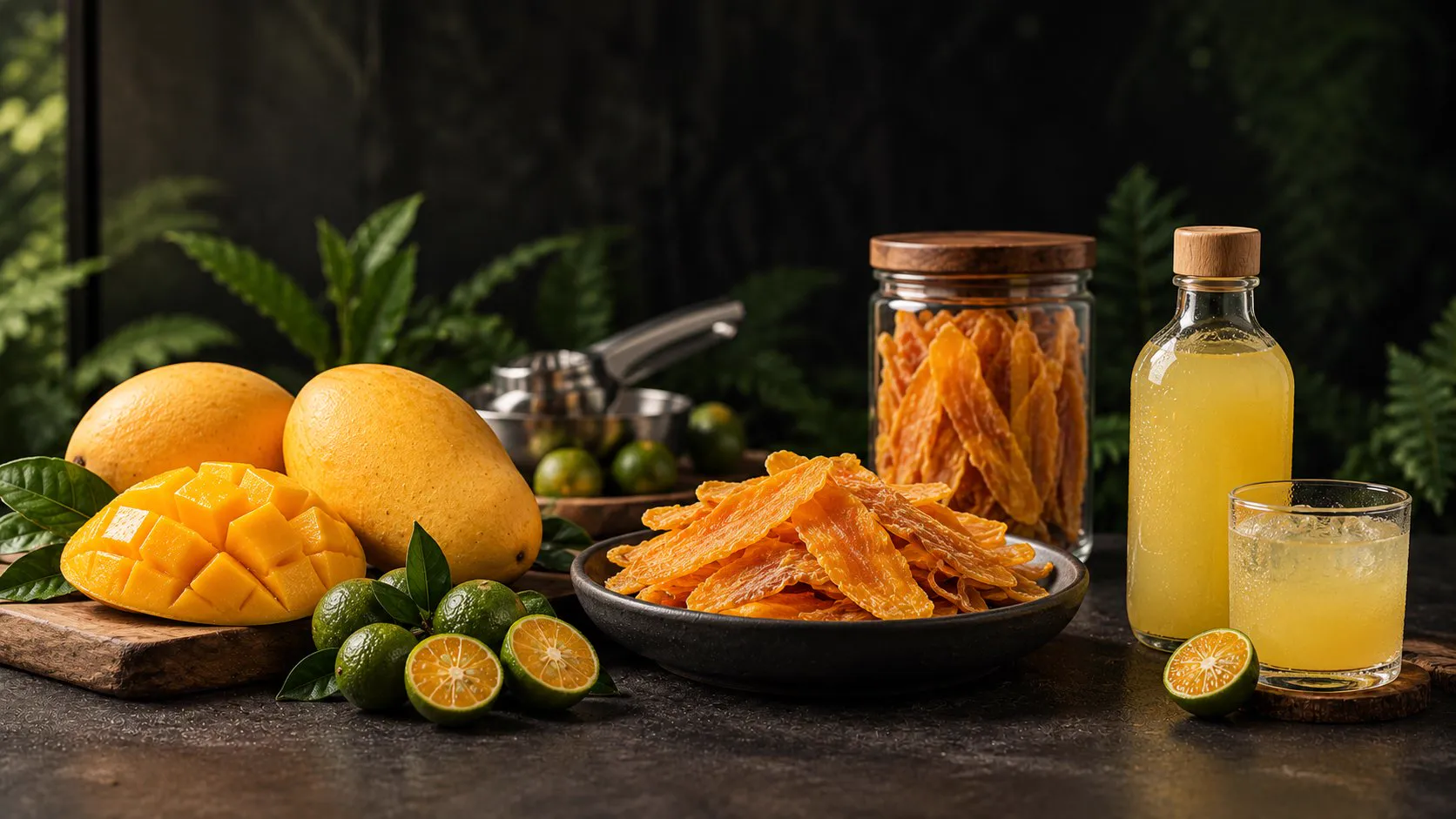
From the tree to the table
The path steps out of the garden and into the sun, and suddenly you are on a working farm.
Rows of fruit and nut trees stretch away on both sides, with vegetables and vines growing in the bright alleys between them. Your guide stops beneath a broad, leafy tree and holds out a wooden tray: purple-black fruits, a cracked shell, and a pale, glossy kernel.
This is pili, Canarium ovatum, a Philippine native whose heartland is the Bicol region. Every part of the pili has a use: the roasted kernel tastes like a buttery pine nut, the boiled pulp is eaten like sweet potato, the young shoots go into salads, and the rock-hard shell becomes cooking fuel or bedding for orchids back in the nursery. Pili trees stand strong in a typhoon wind, so they shelter the gentler crops around them.
Most pili is still gathered from wild trees. A planned orchard, with male and female trees growing side by side, turns it into a dependable harvest. Mixing trees, shrubs and crops this way builds healthier soil, shelters wildlife and spreads a farm’s income across many seasons.
One harvest, many treasures
Roasted, brittle and chocolate
Guests watch how one harvest becomes several treats through cracking, sorting and roasting: salted kernels, golden brittle and chocolate-dipped pili. Bicol has made pili candy famous across the country, and in 2023 the European Union opened its doors to the raw nut.
Sunshine in a jar
The Philippine Carabao mango is celebrated as one of the sweetest in the world, and centuries ago the Manila galleons carried Philippine mangoes to Mexico, where they became the ancestors of the Ataulfo. Beside it, calamansi, the little kumquat-mandarin citrus that brightens almost every Filipino meal, becomes juice and the farm’s signature cooler.

The lychee experiment
Some trees on the farm are adventures, and that is part of the fun. Lychee, Litchi chinensis, came to the Philippines from China and loves a month of cool nights before it will bloom, which is why it thrives in the highlands of the Cordillera. UP Los Baños answered with ‘UPLB Red’, a lowland variety raised from Thai seed and approved for planting in the Philippines.
So the farm plants a small, carefully labeled trial: lowland-friendly varieties, a weather log, and a guide who checks every flowering season. Guests can follow the trees year to year, and when the first red fruits finally appear, Leticia’s Kitchen will celebrate with a seasonal lychee margarita.
The trial beds turn the farm into a living research station. Every note in the logbook helps Filipino growers learn what thrives in Tayabas.
The long view of agarwood
Here is the heart of the farm, and the reason it was founded.
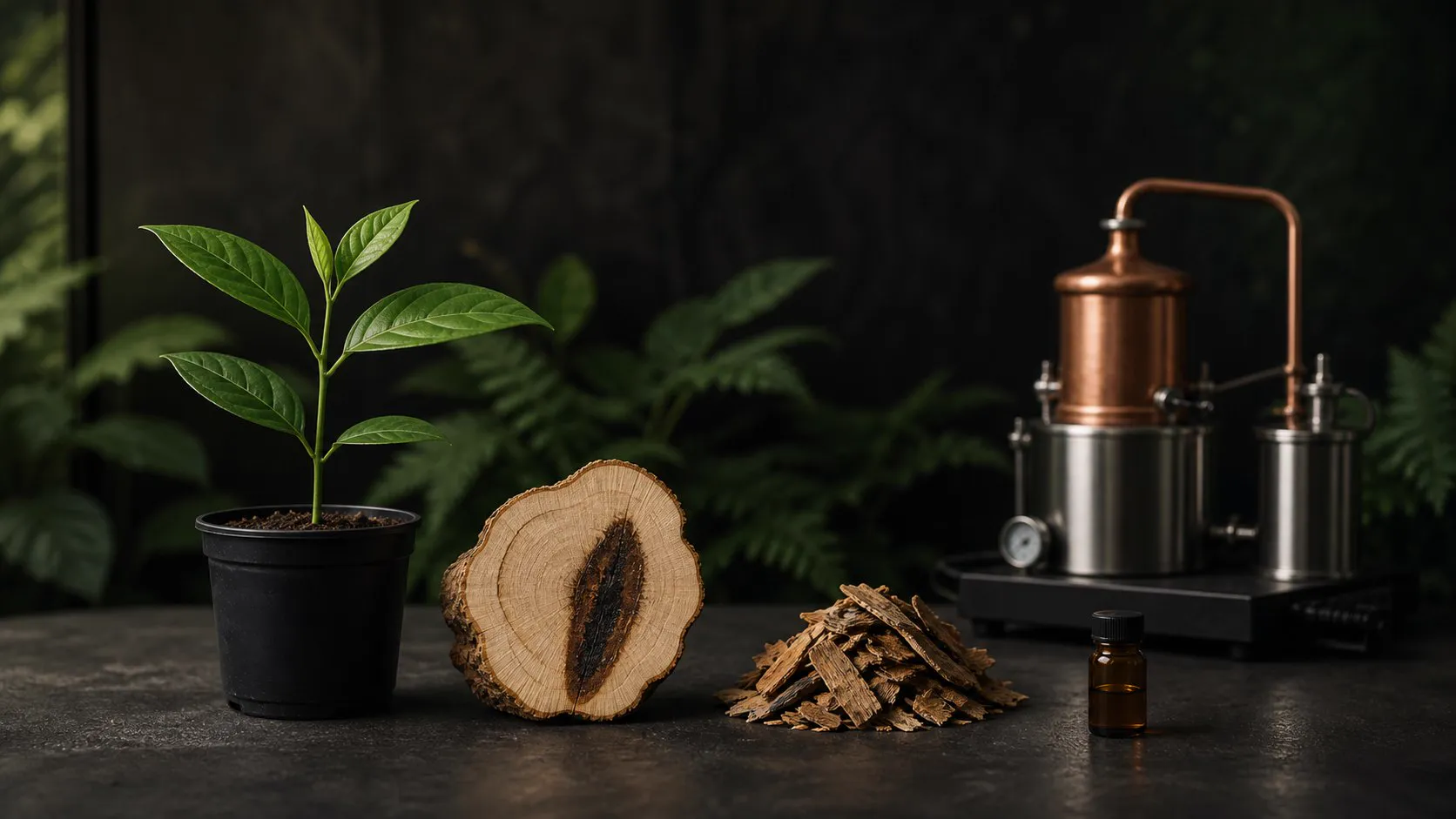
The trees look modest: smooth grey bark, glossy pointed leaves. Inside, they hold one of the world’s great treasures. This is Aquilaria, the source of agarwood, called oud in the Middle East and lapnisan here at home. When the tree is wounded and fungi move in, it fills its heartwood with a dark, fragrant resin to defend itself. In the wild only about one tree in ten ever does.
The guide passes around a tray of wood samples and warms a sliver in a small burner. A thread of smoke rises: sweet, balsamic, a little like vanilla. It is a scent that has perfumed temples, palaces and prayers for thousands of years.
A. malaccensis · Critically Endangered (IUCN)CITES Appendix II
Wild agarwood is rare today, and planted groves are how it recovers. These groves protect the species’ genetic diversity, grow seed so less is ever taken from the wild, and give the world a legal, traceable source.
From seed to oud
They call it the Wood of the Gods. The Hindi word for an incense stick, agarbatti, comes from the Sanskrit agaru, agarwood. The Psalms describe royal robes “fragrant with myrrh and aloes,” and scholars identify those aloes with this very wood. In Nara, Japan, an emperor’s treasure house still keeps a single log of it more than a thousand years old. Today oud is treasured from Japan and China to the Middle East, where its scent is a sign of welcome and hospitality.
A seedling, a tree, a dark ribbon of resin, a single drop of oil.
Seeds sprout in sand within weeks and grow up in the shade of the nursery. After five to seven years the young trees are ready, and growers carefully wound or inoculate them so the tree begins making its protective resin. The darkened heartwood becomes chips for incense, and slow distillation turns it into a few precious drops of oud oil.
Two kinds grow here, each in its own grove: the classic oud tree, Aquilaria malaccensis, and its native cousin palisan, A. cumingiana, a small Philippine forest tree with bright orange-red fruit. The Philippines is home to nine of the world’s 21 agarwood species, and six grow nowhere else.
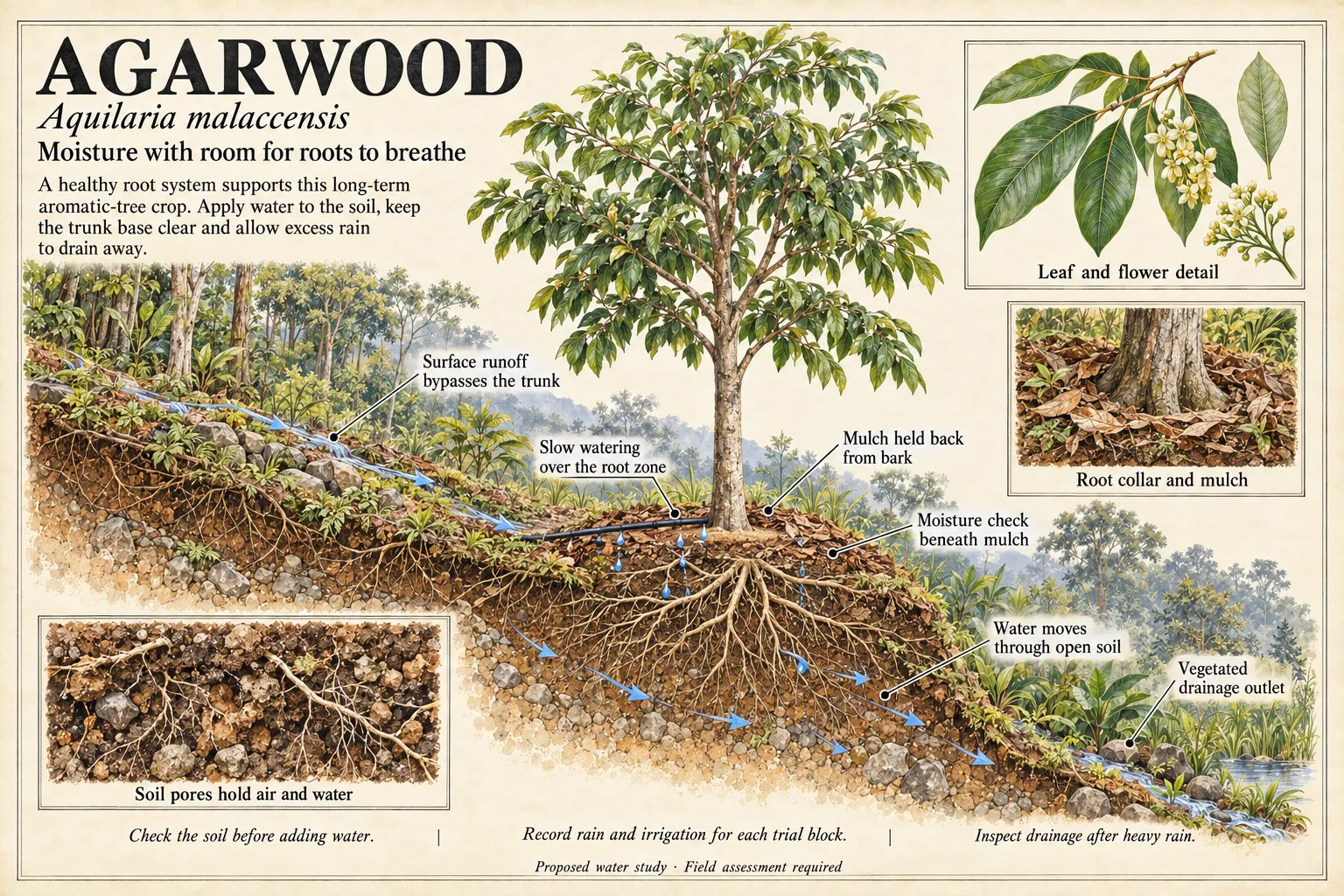
Room for roots to breathe
Agarwood rewards good soil care. This study shows the plan for every tree in the grove: rainwater slowed across the slope, mulch held back from the trunk, and soil that drains after a storm so the roots always have both air and water.
Each block keeps its own rain and irrigation record. Over the years those notebooks become a priceless guide for anyone in the Philippines who wants to grow agarwood responsibly.
Visiting students, growers and families see the whole system in one place: the tree, the soil, the water and the long-term care that makes a sustainable harvest possible.
Brunch at
Leticia’s Kitchen
By noon the morning walk has earned its reward. A timber pavilion opens onto the lily pond, woven lanterns sway overhead, and the kitchen is already sending out the scent of grilled fish and toasted coconut. Nearly everything on the table grew within sight of your chair.
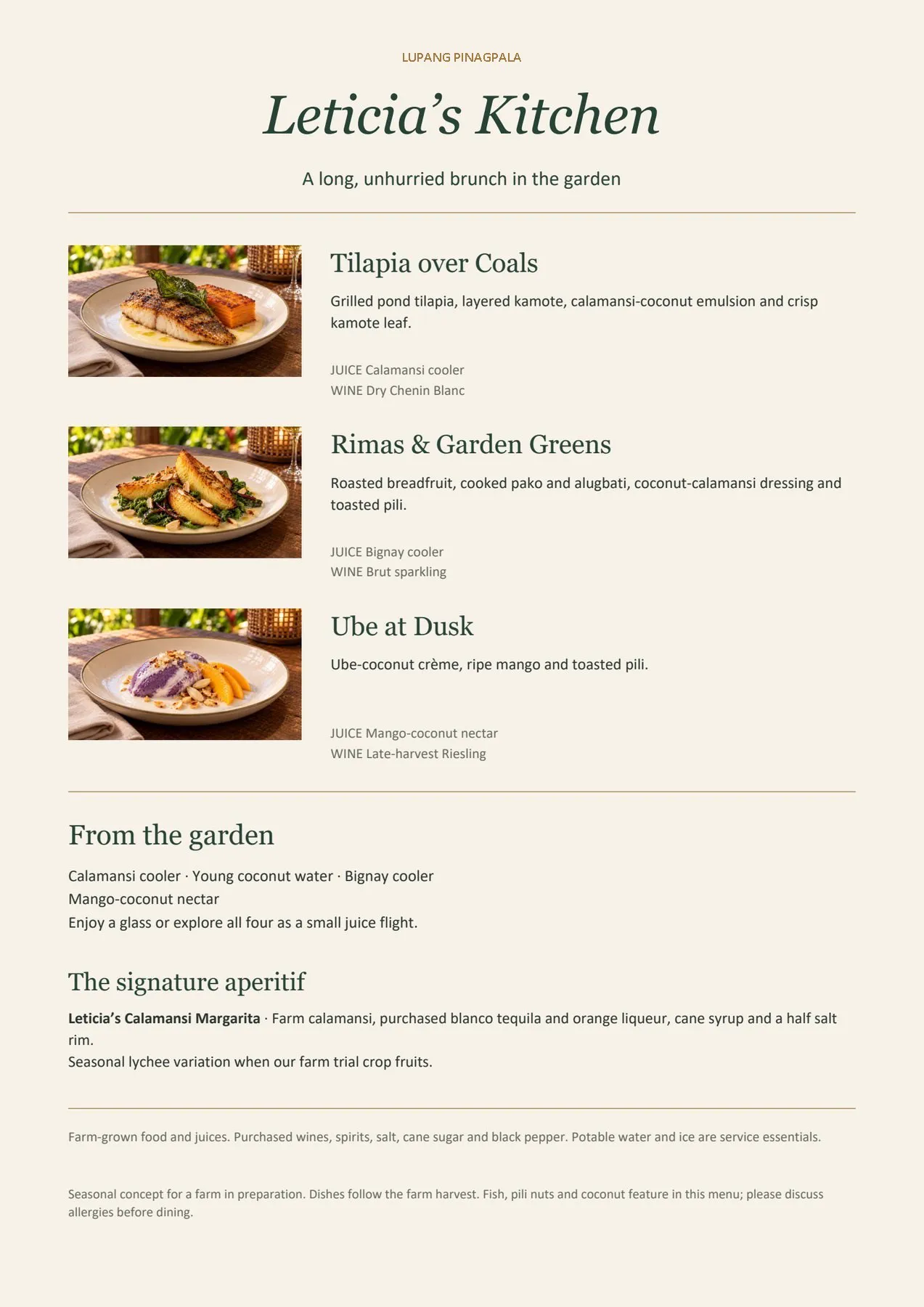
Pond, garden and orchard
Three plates, four garden juices and one very good cocktail.
Leticia’s Kitchen cooks the way Filipino grandmothers always have: with what is fresh, ripe and close at hand. The farm grows the food and the juices. Wines and a few pantry staples come from trusted producers to finish each plate.
Tilapia over Coals
Grilled pond tilapia, layered kamote, calamansi-coconut emulsion and crisp kamote leaf.
Rimas & Garden Greens
Roasted breadfruit, cooked pako and alugbati, coconut-calamansi dressing and toasted pili.
Ube at Dusk
Ube-coconut crème, ripe mango and toasted pili.
The garden juice flight: calamansi cooler, young coconut water, bignay cooler and mango-coconut nectar. And for a toast, Leticia’s Calamansi Margarita, with a lychee version when the trial trees fruit.
Each dish comes with a garden juice and an optional wine pairing chosen to suit it.
A plate of the farm, a glass of the garden

Rimas & Garden Greens
Golden wedges of roasted breadfruit rest on warm pako and alugbati, finished with coconut-calamansi dressing and a scatter of toasted pili. Crisp outside, soft and nutty within.
Pair with the bignay cooler or a glass of brut sparkling wine.
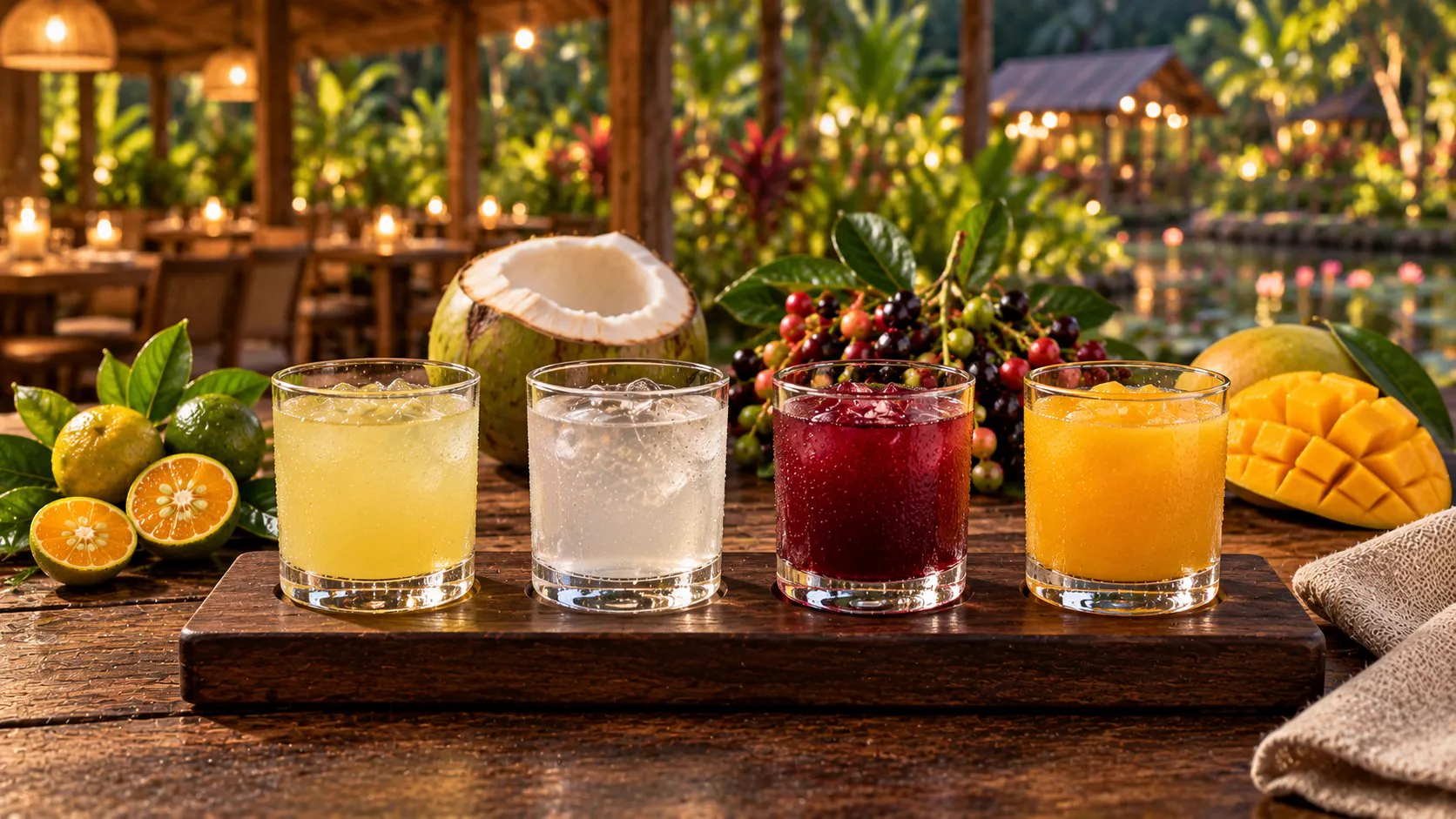
Four glasses, four corners of the farm
Calamansi cooler from the orchard. Young coconut water, poured fresh. Deep-red bignay cooler from the native berry. And a velvety mango-coconut nectar to finish. Guests sip left to right and vote for a favorite.
Grown on the blessed land
Every ingredient on the menu has a story, and guests can hear it at the table. These are the fruits of the pond and orchard, each with roots deep in Filipino life.
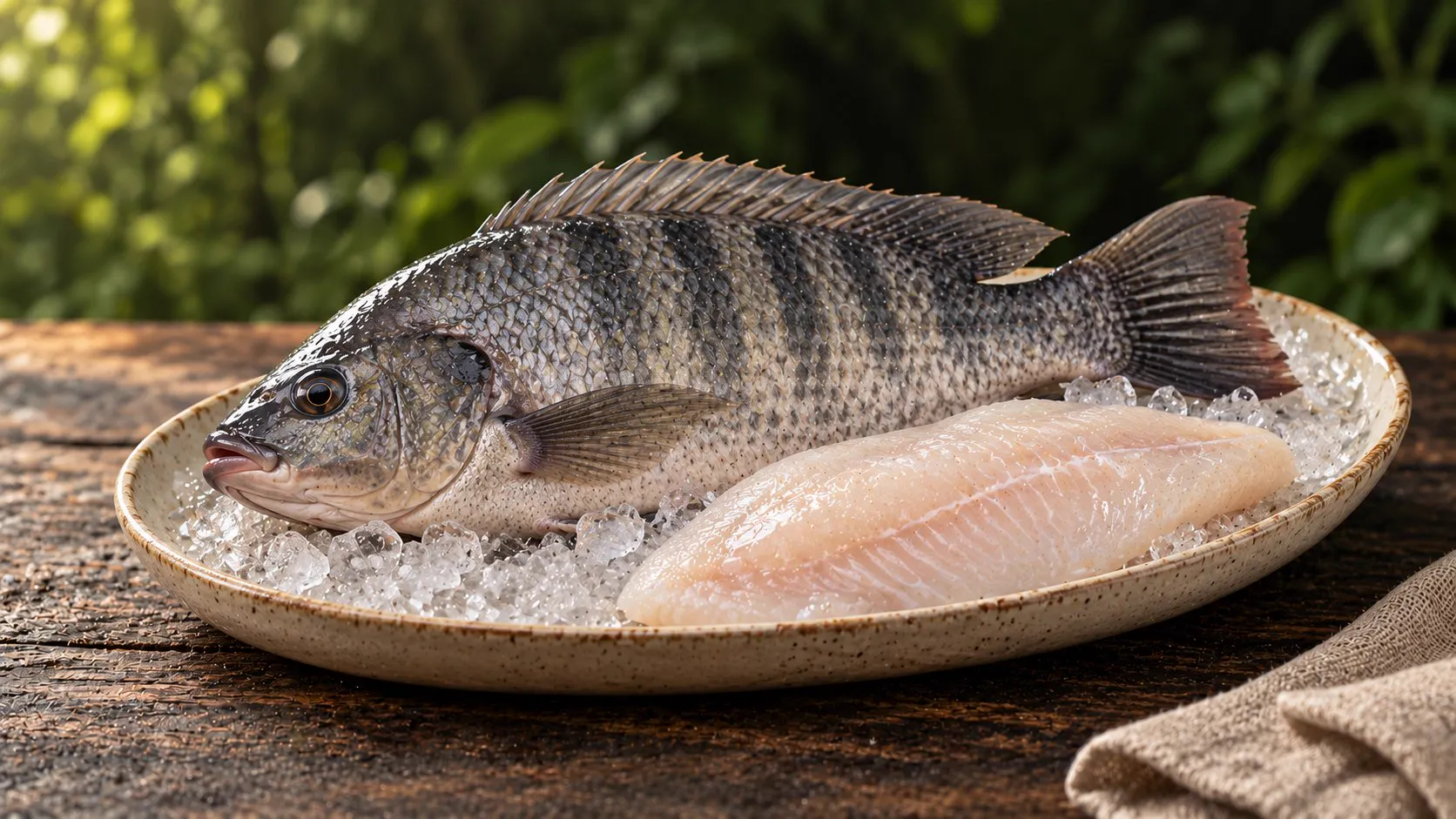
Tilapia from the pond
First arrived in 1950, a fish that “breeds so easily that anyone can be a fish farmer.” The improved GIFT strain, developed at Central Luzon State University, now feeds families across Asia.
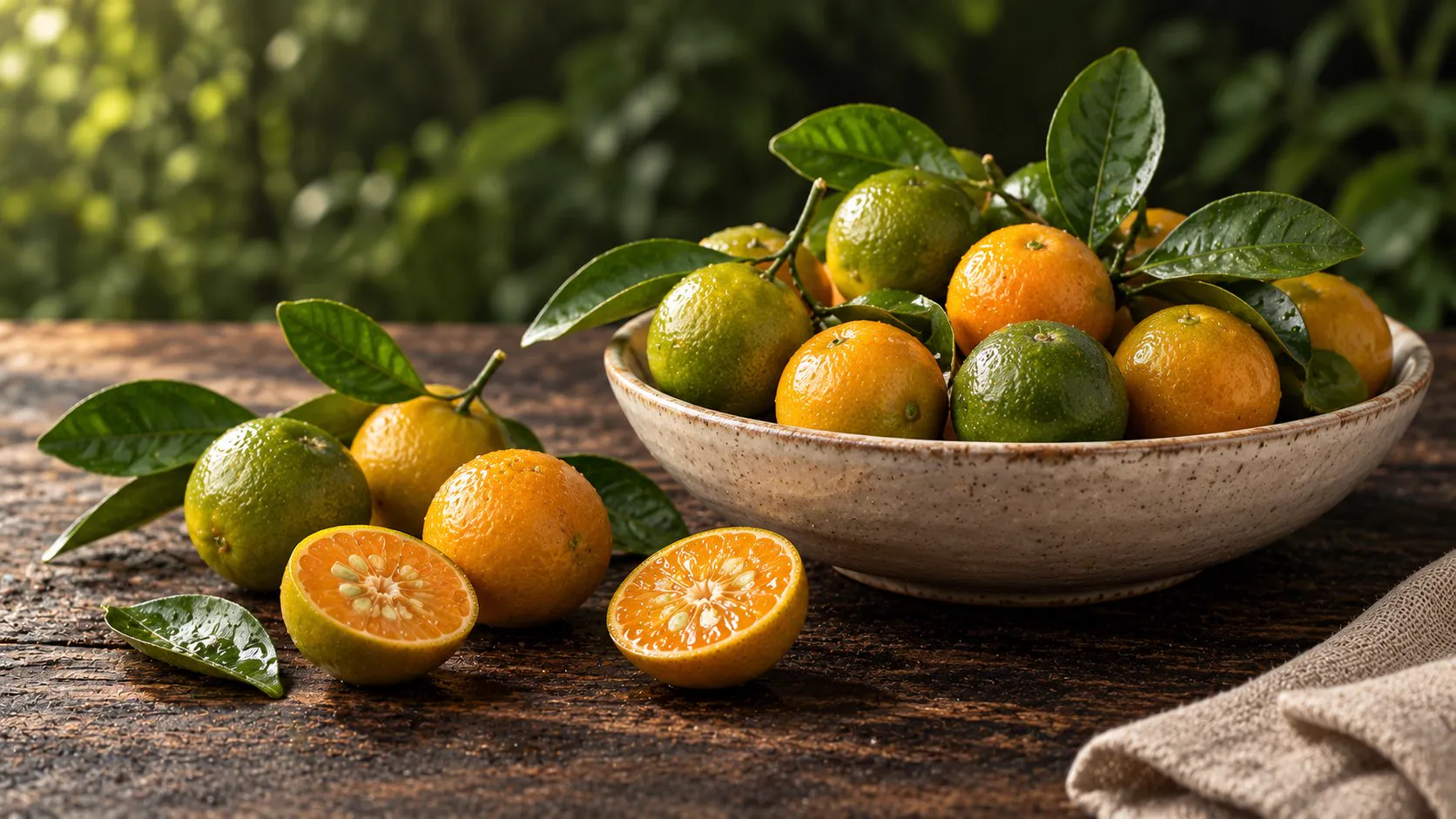
Calamansi Citrus × microcarpa
The Philippines’ favorite citrus. Squeezed over pancit, stirred into toyomansi, poured over ice.
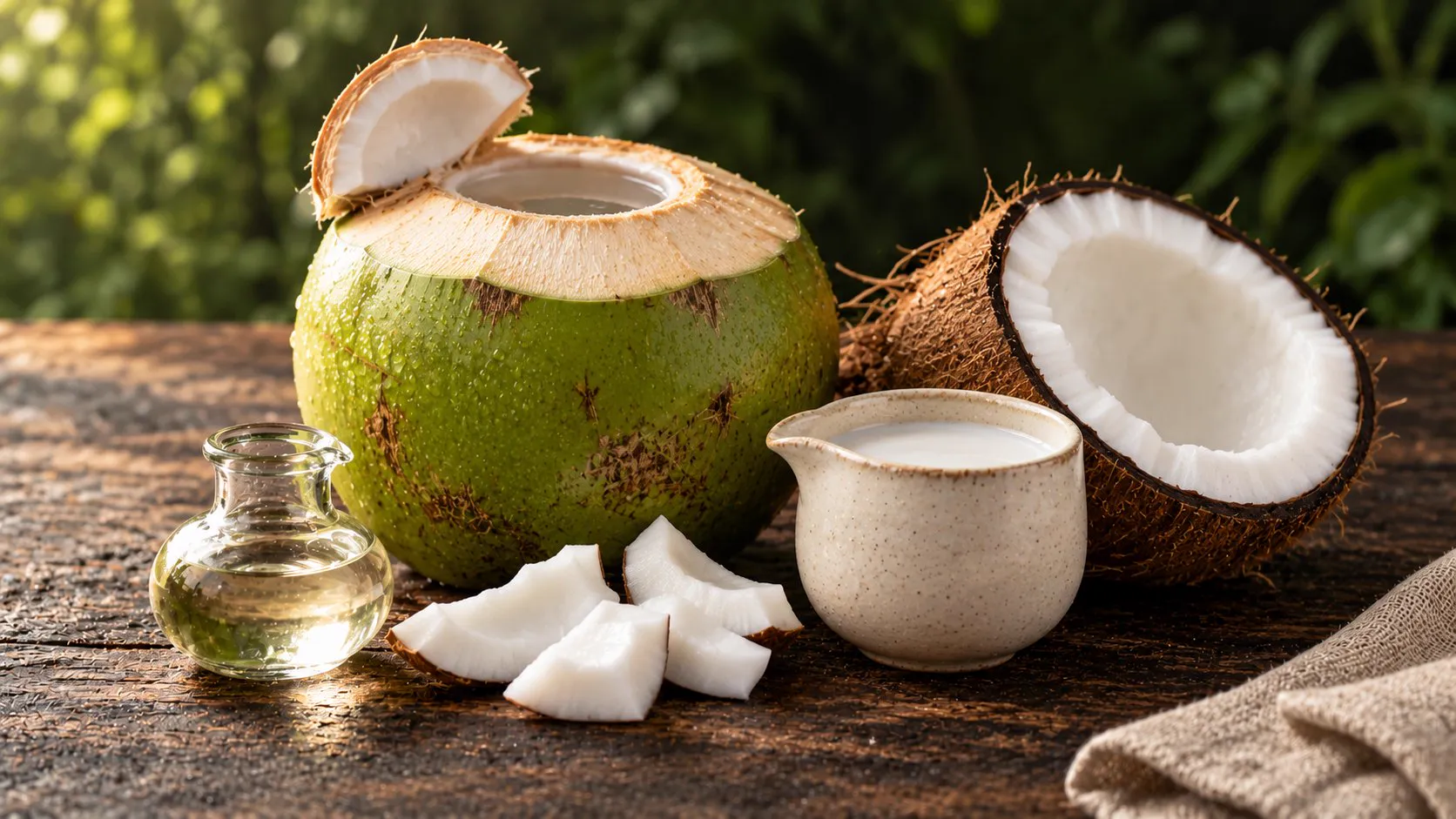
Coconut niyog
The “tree of life.” Quezon is the top coconut-growing province in the country, and Tayabas distills its sap into lambanog.
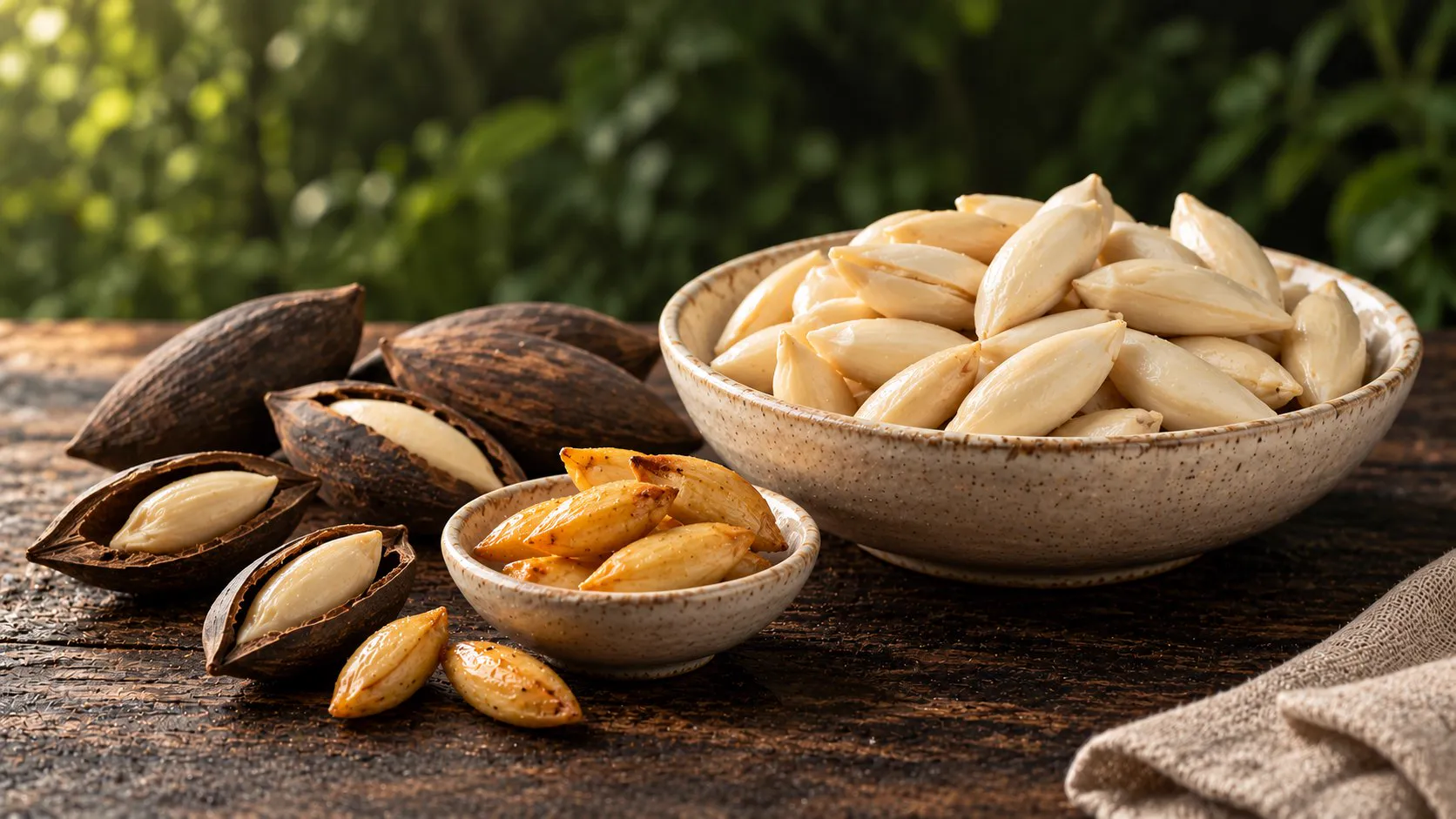
Pili Canarium ovatum
A Philippine native from Bicol. The roasted kernel is rich and buttery, the pride of Filipino nut candy.
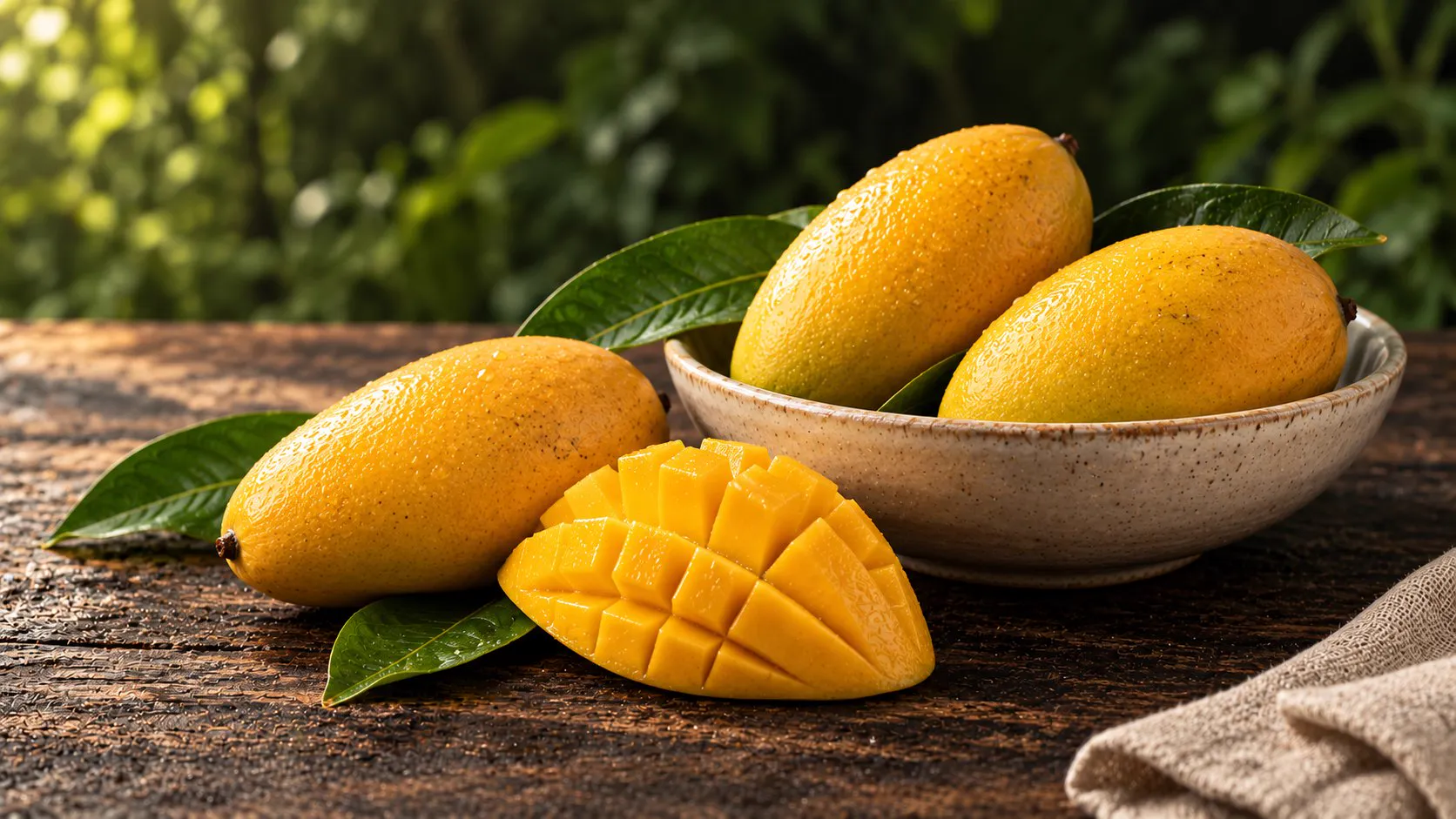
Carabao mango mangga
Named for the water buffalo and loved worldwide. Guimaras mangoes became the country’s first geographical indication in 2023.
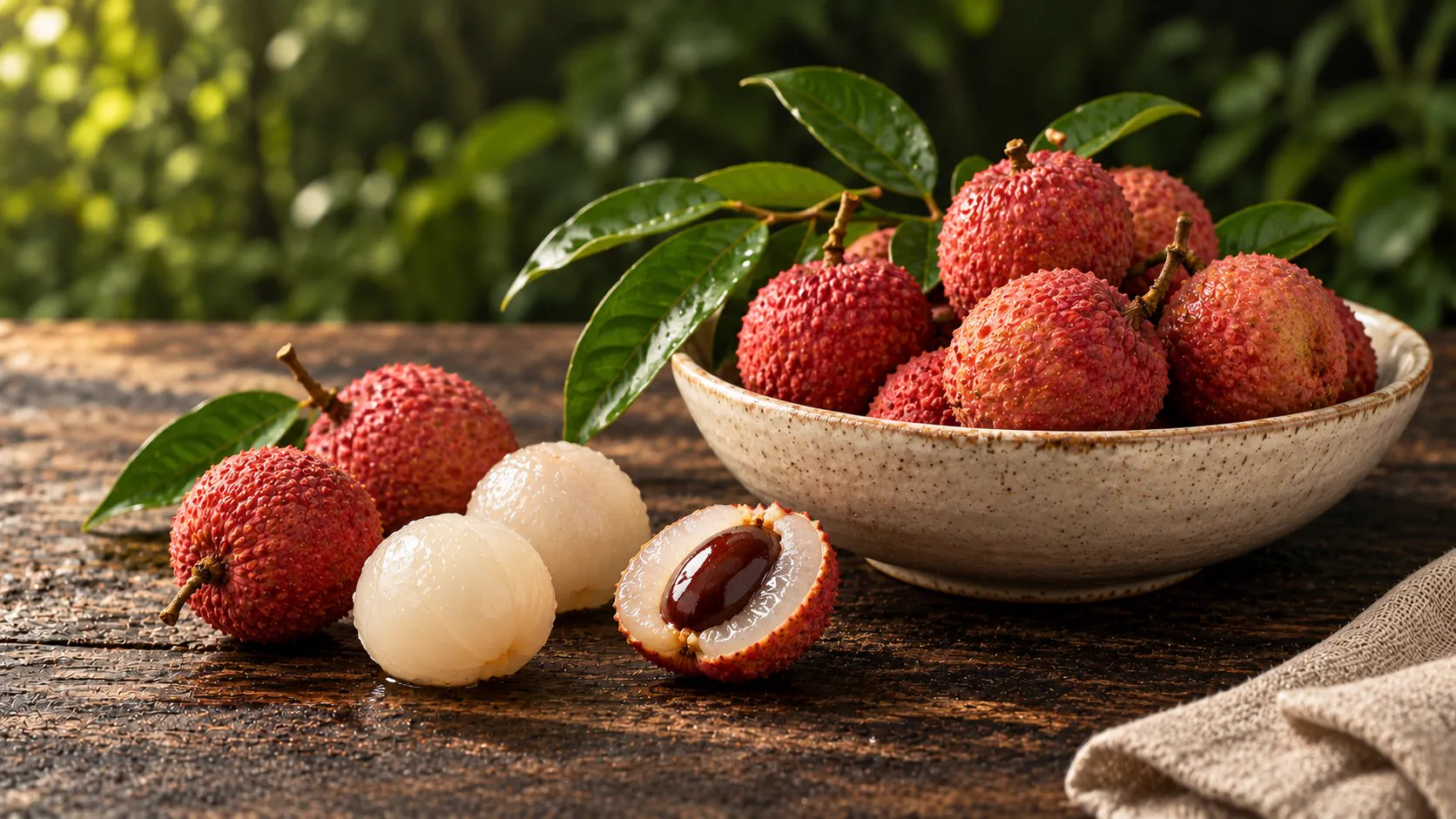
Lychee litsiyas
Rose-scented and juicy. The Philippines even has its own wild cousin, alupag, which shows real promise as a rootstock for grafted trees.

Bignay Antidesma bunius
A native berry that ripens white, red and black on one bunch. UP Los Baños developed a recipe for a ruby fruit wine rich in antioxidants.

Batuan Garcinia binucao
A Philippine endemic and Slow Food “Ark of Taste” heritage fruit, the clean souring secret of Ilonggo KBL, a soup of kadyos, baboy and langka.
Roots, greens and rimas
From the food alleys and the edge of the pond come the earthy, leafy and starchy staples that make Filipino cooking so comforting.
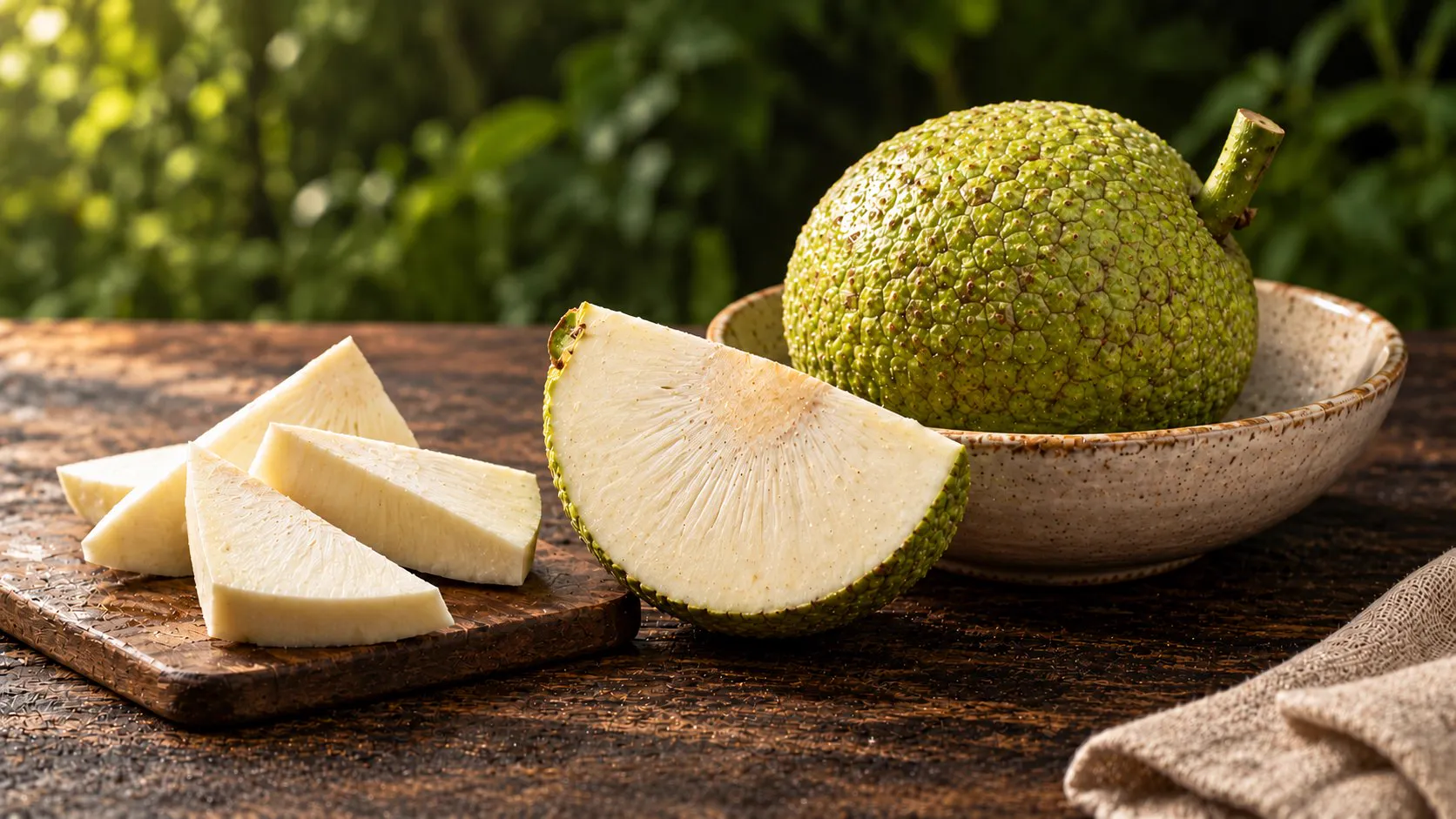
Rimas · breadfruit Artocarpus altilis
Spread across the Pacific by voyagers some 3,000 years ago. Roasted, it smells like fresh bread; Filipinos also love it sweetened with coconut and sugar.

Ube · purple yam Dioscorea alata
Its name traces back to ancient Austronesian, the same root as the Māori uwhi. Stirred slowly into glossy ube halaya.
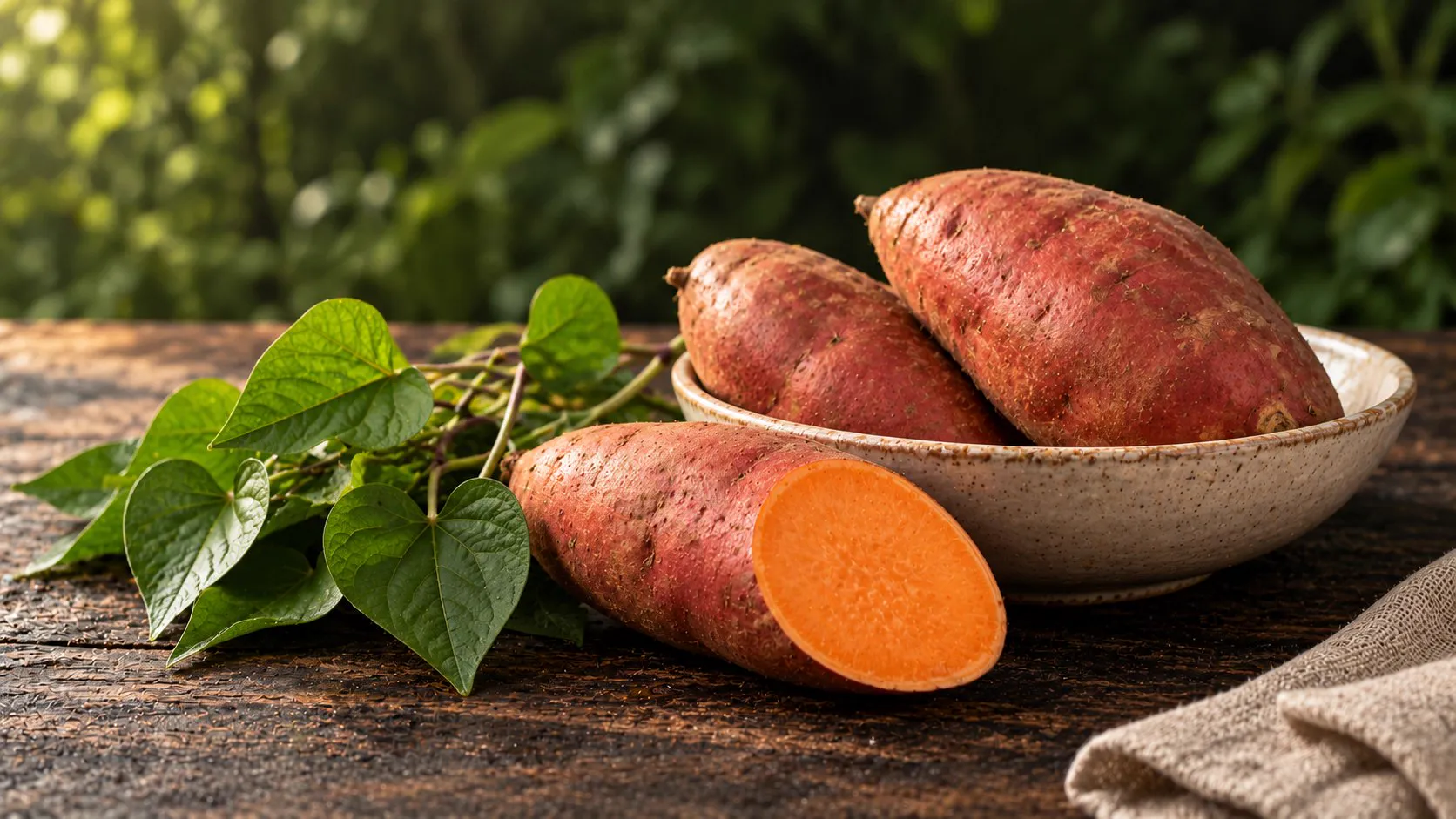
Kamote · sweet potato Ipomoea batatas
Sailed in from Mexico on the Manila galleons; its name comes from the Aztec camohtli. Filipinos eat the roots and the tender tops.

Pako · vegetable fern Diplazium esculentum
Southeast Asia’s favorite edible fern, also called tagabas. One old story says the town of Tayabas took its name from a fern.
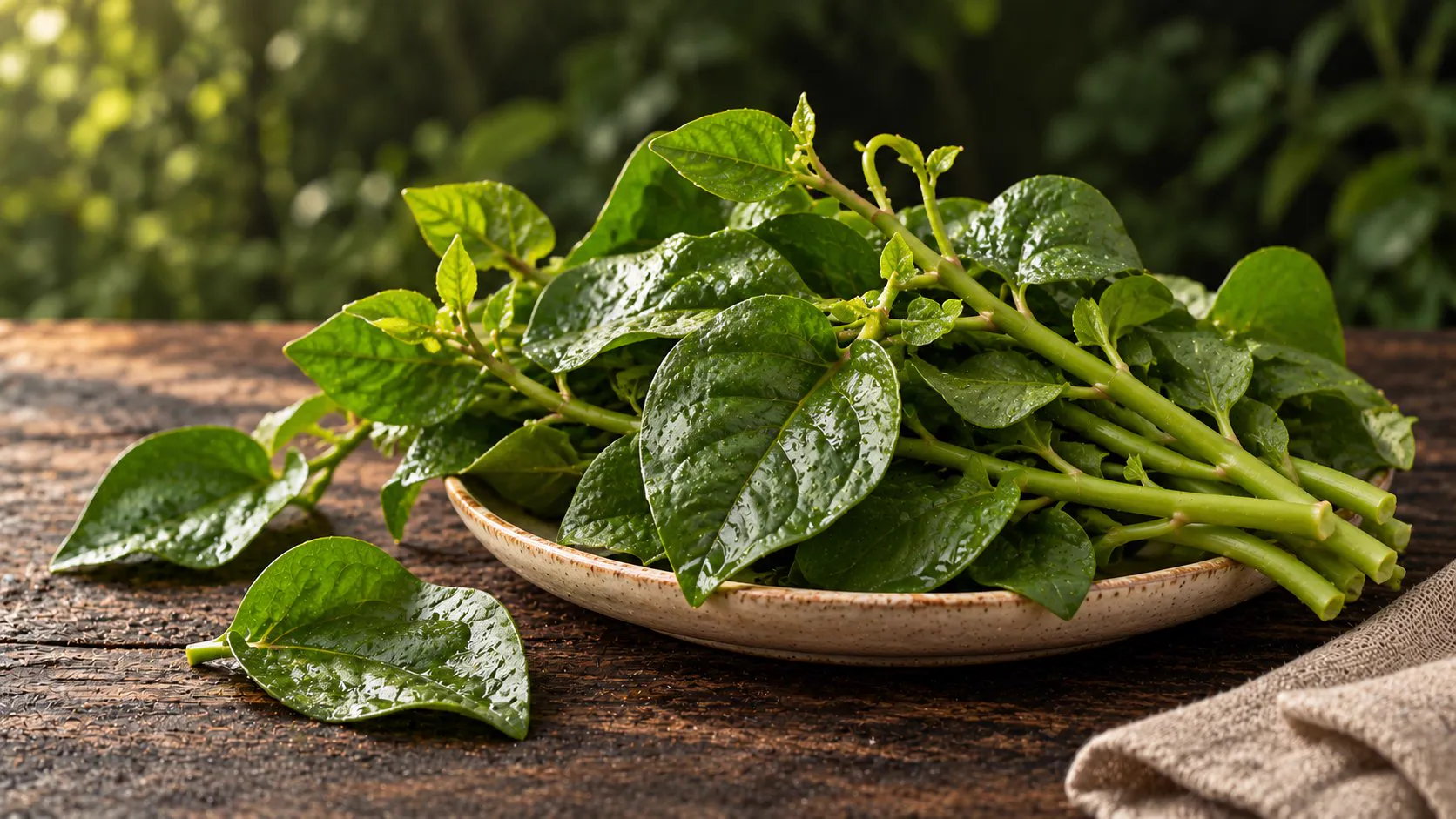
Alugbati · Malabar spinach Basella alba
A native climbing green with ruby or green stems that turns silky when cooked, the heart of the Visayan vegetable dish utan.
Thirteen farm ingredients,
one menu
Coconut alone gives the kitchen water, young flesh, milk, cream and oil. Calamansi appears in nine of the menu’s dishes and drinks. When the farm grows the food, the menu follows the seasons, and every visit tastes a little different.
Chosen with care
A handful of essentials come from trusted producers beyond the farm gate: sea salt, black pepper, cane sugar, clean drinking water and ice, the spirits for Leticia’s signature margarita, and three wines selected to sing alongside the food.

Sea salt
For seasoning and the margarita’s half-salt rim.

Black pepper
A gentle warmth for fish and greens.

Cane sugar
Simple syrup, granita and dessert.

Water & ice
Pure drinking water, the quiet essential.
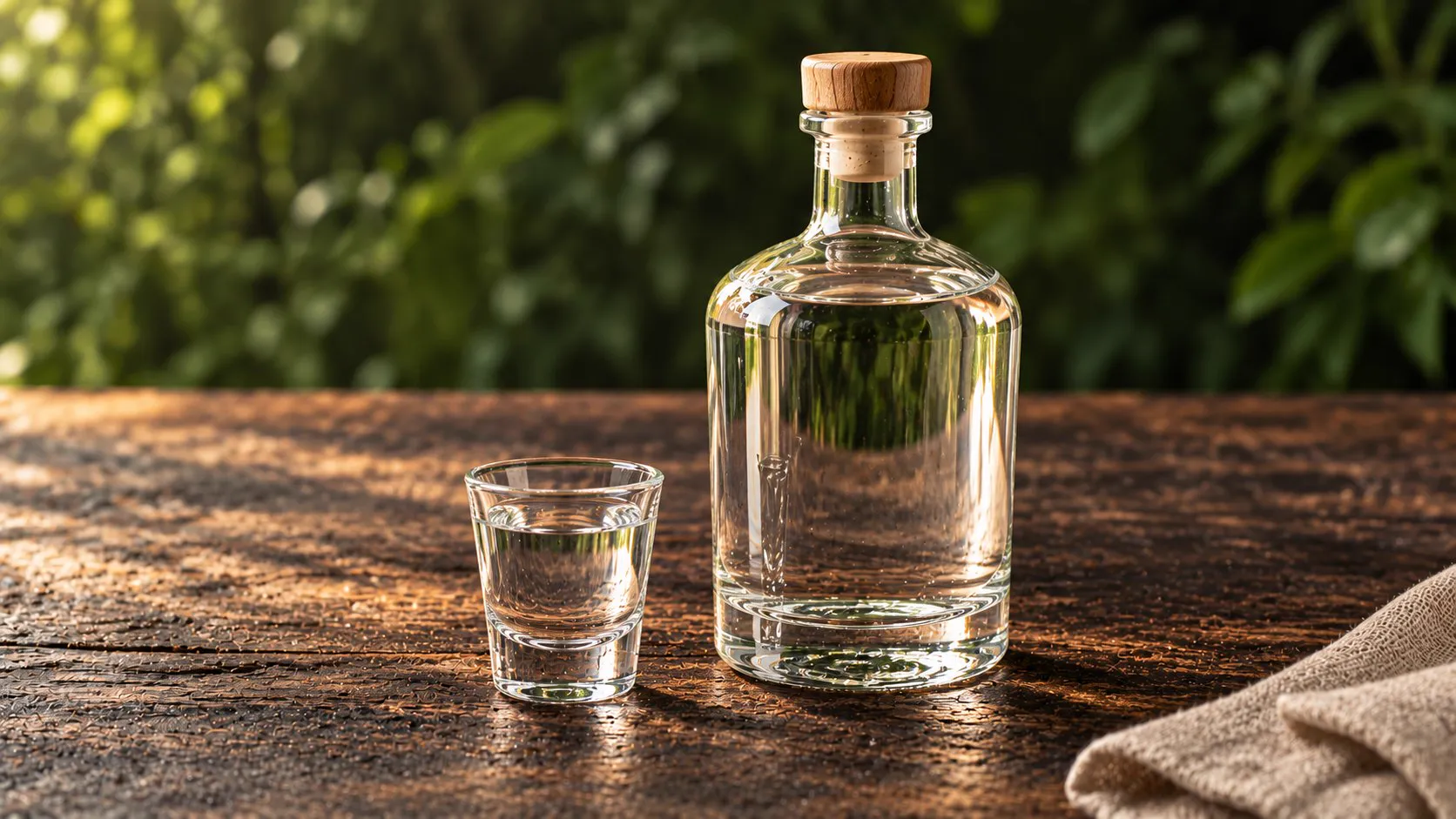
Blanco tequila
100% agave, for the signature drinks.
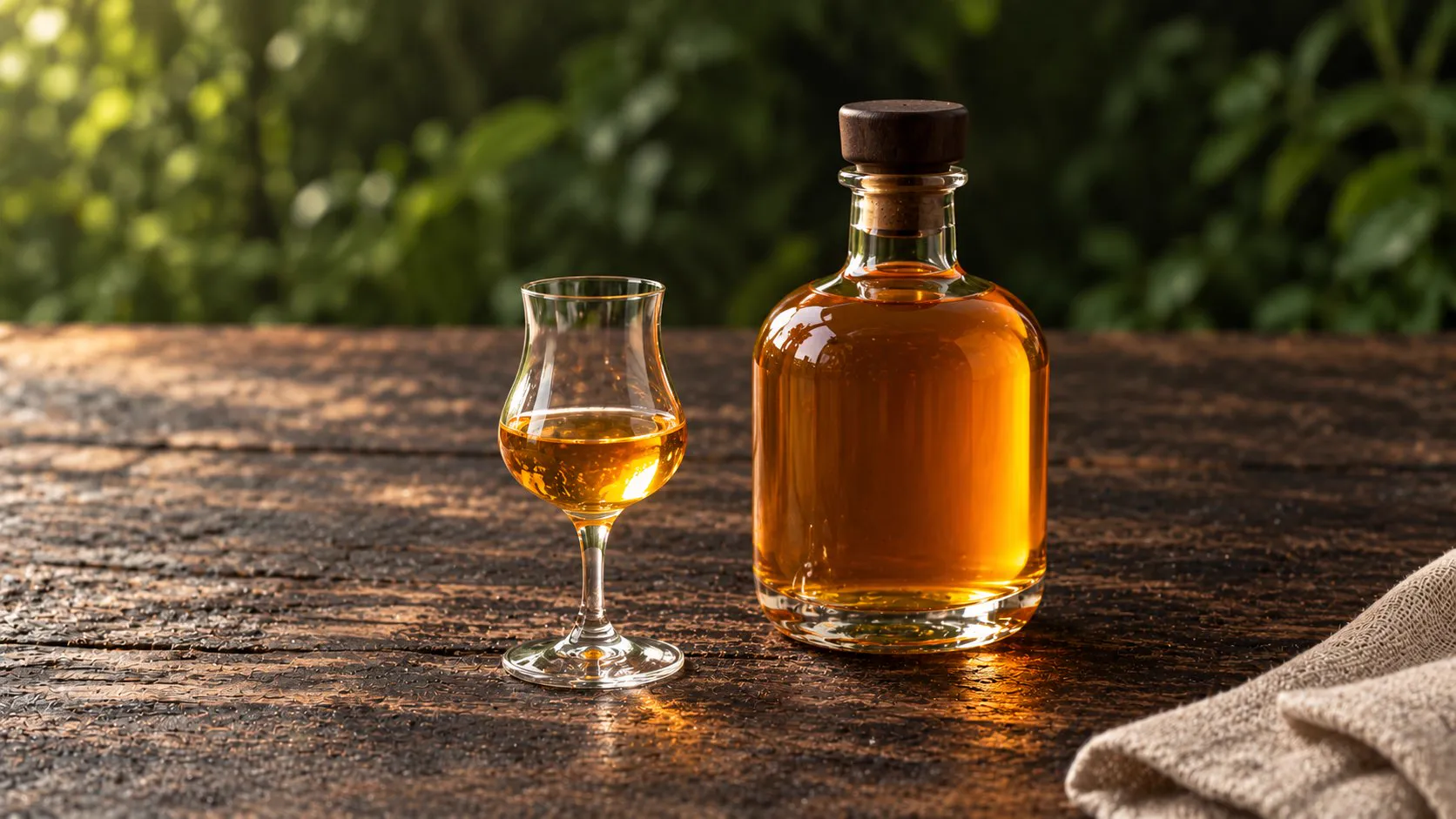
Orange liqueur
The citrus perfume in every margarita.
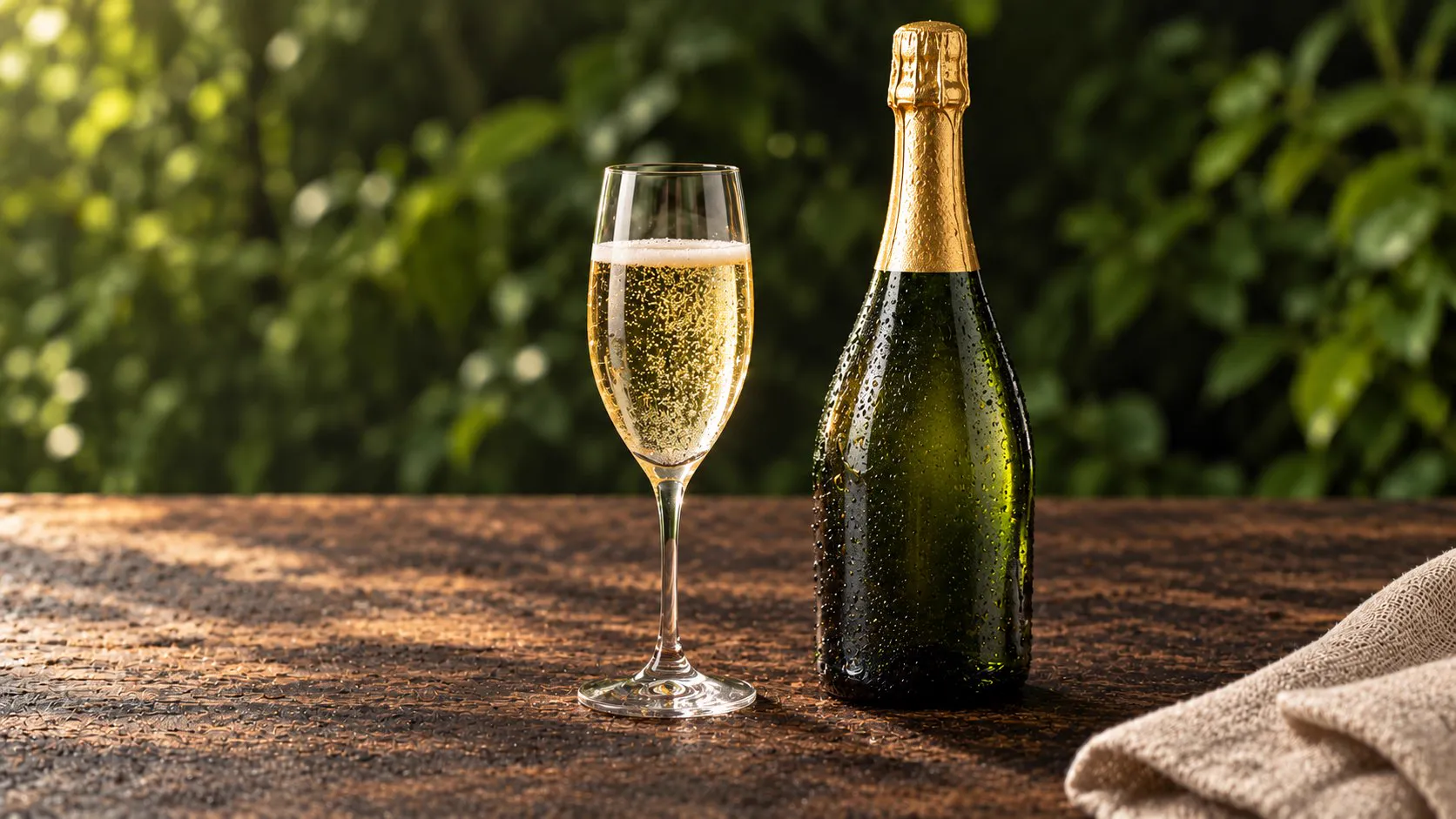
Brut sparkling
Bright bubbles for breadfruit and greens.
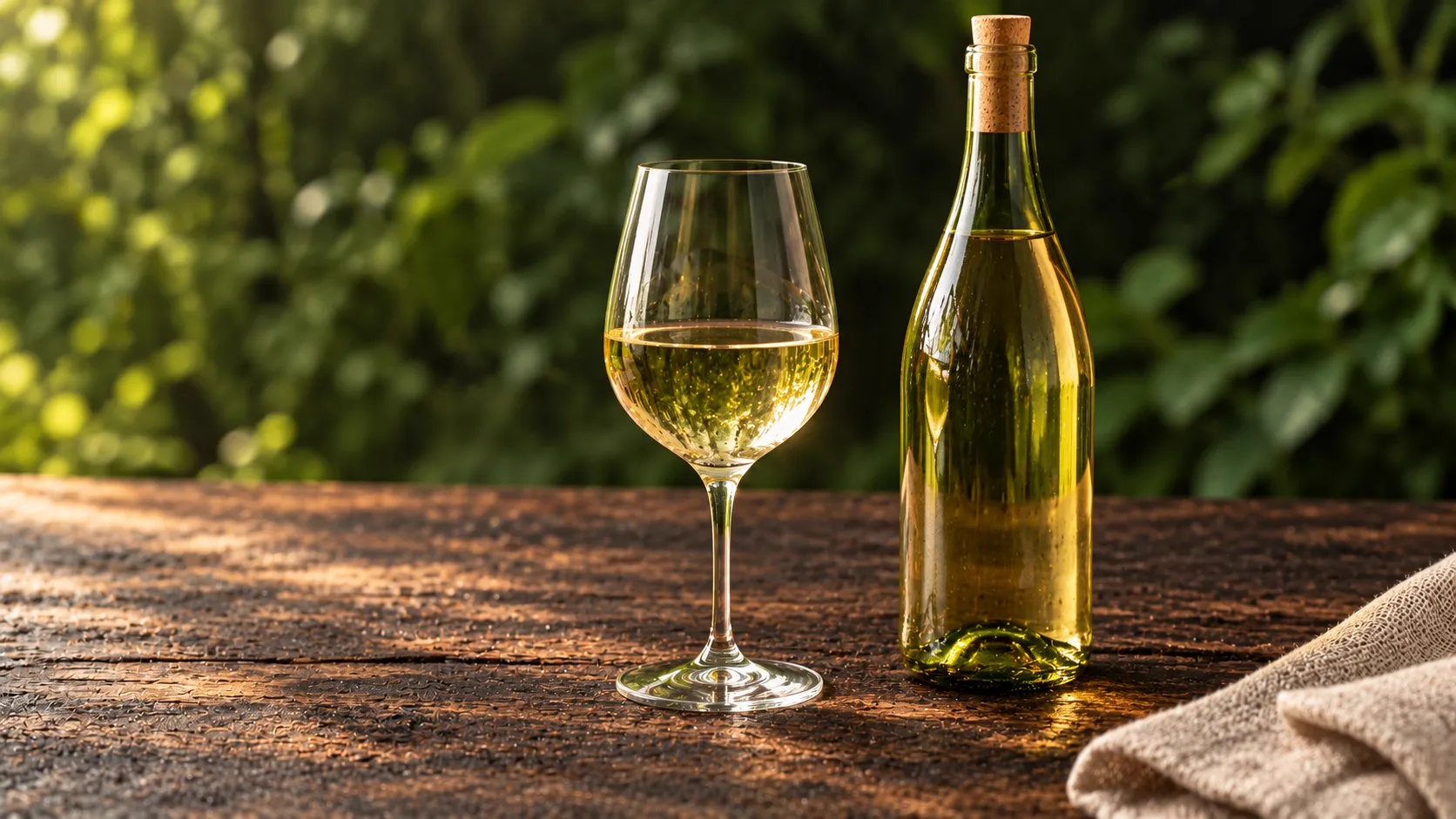
Dry Chenin Blanc
Fresh and clean beside broth and grilled fish.

Late-harvest Riesling
Honeyed and golden, for ube and mango.
Garden first, always
At every course, guests can choose a farm juice pairing in place of wine: calamansi cooler, young coconut water, bignay cooler or mango-coconut nectar. The wines and spirits are there to celebrate the harvest, and the harvest always leads.
Afternoon in
the Woodland
After lunch the loop climbs into the shade of the native forest, past a grove of creaking bamboo, and finishes among Leticia’s roses before circling back to Diana’s Pasalubong Shop.
Stand beneath a future canopy
After lunch the path climbs gently into shade, and the temperature drops a few welcome degrees.
Above you spreads the crown of a narra, Pterocarpus indicus, named the national tree of the Philippines in 1934. Every year from about March to May it bursts into waves of fragrant golden blossoms, humming with bees, and its rose-scented heartwood polishes to red and gold. The guide holds up a small, round pod with a papery wing all around it, the tree’s way of sailing its seed on the wind.
Around the narra grow the other great native hardwoods: molave, which built the Manila galleons; yakal, found naturally in Quezon’s own lowland forests; apitong, guijo, tanguile, red and white lauan, and ipil.
Endangered · IUCNVulnerable · DENR 2017 list
In 1900, forest covered about 70% of the Philippines. Every native tree planted here helps that green return: each one is a living seed bank, and narra even feeds the soil around it with nitrogen.
A building material that grows itself
Listen before you look: the bamboo grove creaks and whispers with every breeze.
The guide hands you a short, smooth section of culm, the bamboo’s stem. Peer inside: it is hollow, divided by solid rings called nodes that make it astonishingly strong for its weight. This grove holds giant bamboo, Dendrocalamus asper, and the thorny kawayan tinik, a fixture of Filipino riverbanks since prehistoric times.
Bamboo is a grass, and a fast one. A kawayan tinik shoot can grow 45 centimeters in a single day late in the rainy season, and giant bamboo reaches full height in less than one season. Filipinos have built with it for centuries: the floors, walls and frame of the bahay kubo, the beloved stilt house of the folk song. Today Filipino scientists are pressing it into engineered panels that are often stronger than comparable solid wood.
A bamboo clump gives a harvest every year and keeps standing. Its roots bind the soil on slopes and creek banks, and every culm used for building eases the demand on slow-growing forest hardwoods.
A garden that keeps asking questions
The last stop on the loop is Leticia’s rose garden, alive with color from bud to bloom.
On a single shrub you can see three colors at once: buttery yellow buds, soft pink flowers and deep crimson blooms. They are all the same rose, Mutabilis, “the changeable one.” Sunlight does the painting: each flower opens pale and blushes deeper every day it spends in the sun. This ancient China rose reached Western gardens through an Italian prince’s island garden on Lake Maggiore. Gardeners call it the butterfly rose, because the open flowers look like a cloud of butterflies settled on the branches.
Around it grow the other roses chosen for Leticia, from the native Luzon mountain rose to old favorites like Damask, Castilian and Old Blush. Each bed carries a small sign and a notebook, and guests are invited to add their own observations.
What would you write down today to understand how this plant grows here?
Take the farm home with you
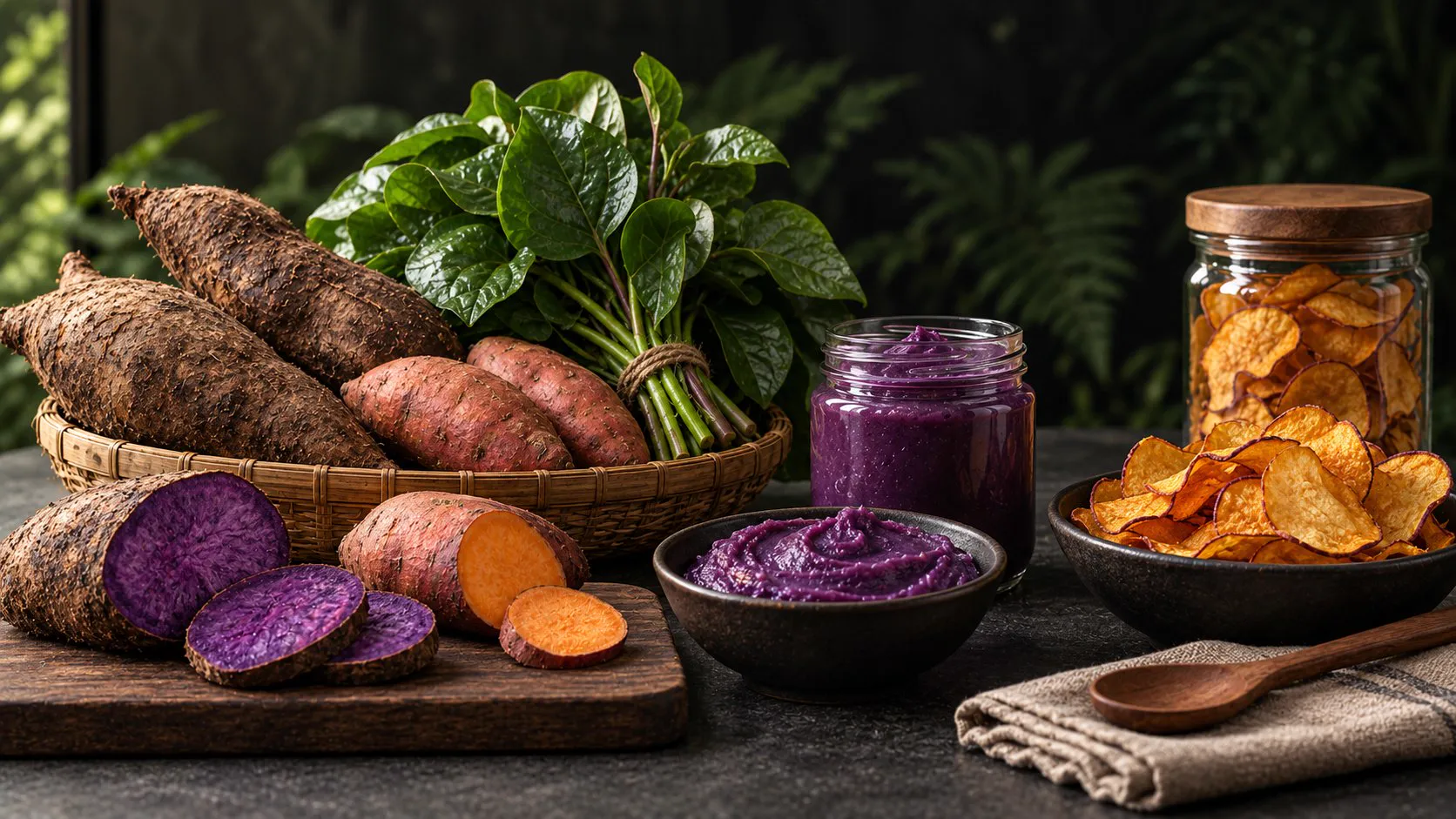
Ube halaya and kamote chips
Back beside the welcome shelter is Diana’s Pasalubong Shop, named for Sister Diana and for the Filipino tradition of bringing a gift home to the family. Its shelves hold the day’s stories: fresh ube and kamote, bundles of alugbati, jars of silky ube halaya and crisp sweet-potato chips. Cut the roots side by side and you can see the difference: purple yam on one side, orange sweet potato on the other.
A living souvenir
Remember the question from this morning? Here is your answer: the orchids you met in Sister Diana’s Orchid House, ready to go home. Each comes with a care card, so the lesson from Stop 03 keeps growing on a windowsill in Lucena, Manila or anywhere in the Philippines.
The Six-Course Table
The sun drops behind the woodland and the pavilion turns to gold. Lanterns glow, candles flicker on every table, and frogs begin their evening chorus from the pond. Friends old and new pull up their chairs. Tonight, Leticia’s Kitchen tells the story of the whole farm in six courses.
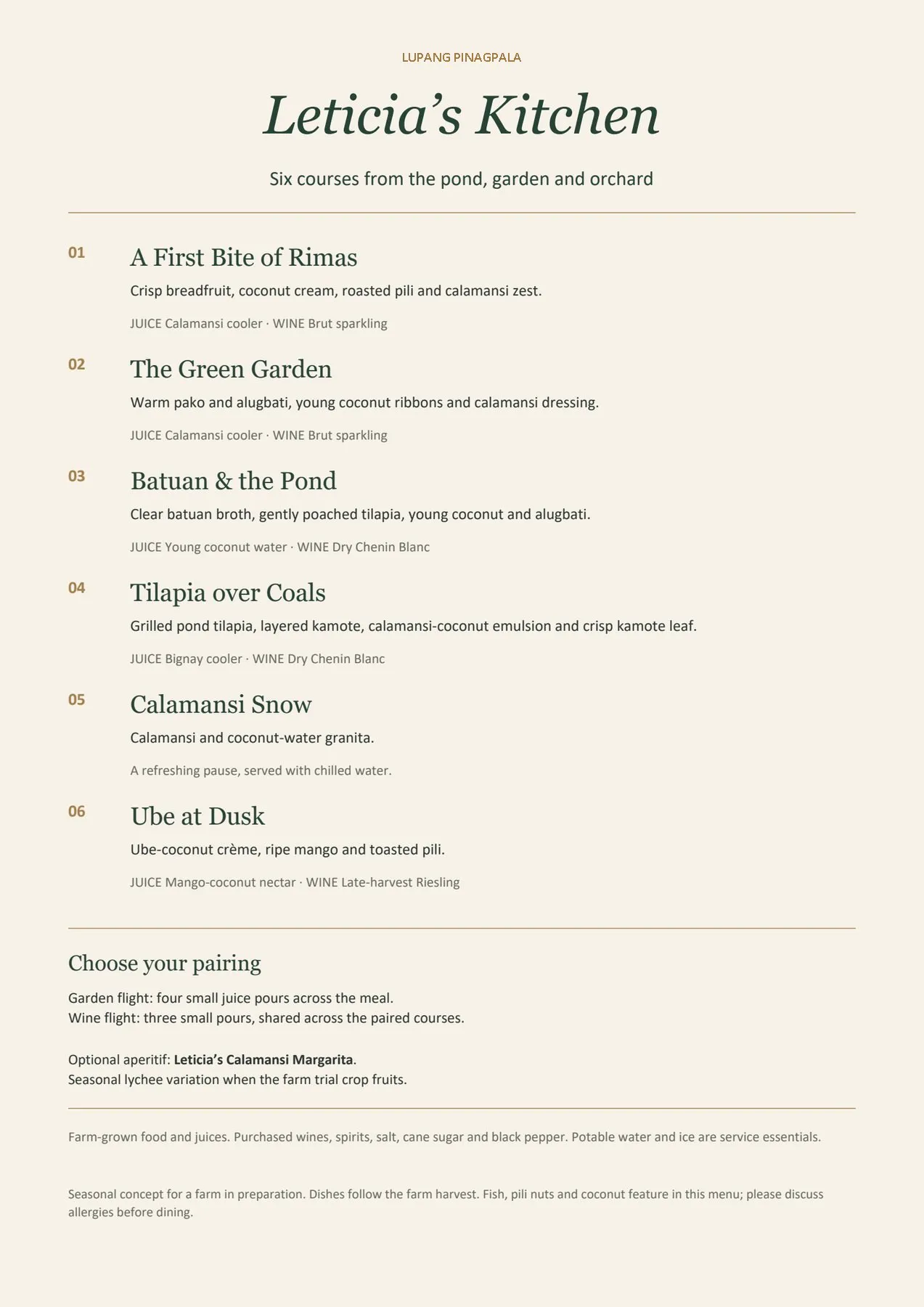
Six courses, one story
The meal retraces the places you walked today.
It opens in the orchard with crisp breadfruit and coconut, moves into the garden for warm greens, slips down to the pond for a sour batuan broth and grilled tilapia, pauses with an icy calamansi snow, and ends at dusk with ube and ripe mango. Two favorites from the noon table, Tilapia over Coals and Ube at Dusk, return in their evening dress.
Guests choose their pairing: a garden flight of four farm juices poured across the meal, or a wine flight of three small pours matched to the courses.
From the orchard to the garden

Crisp breadfruit, coconut cream
A golden square of crisp breadfruit crowned with cool coconut cream, roasted pili and a whisper of calamansi zest. One bite, and the evening has begun.
Calamansi cooler or brut sparkling wine.
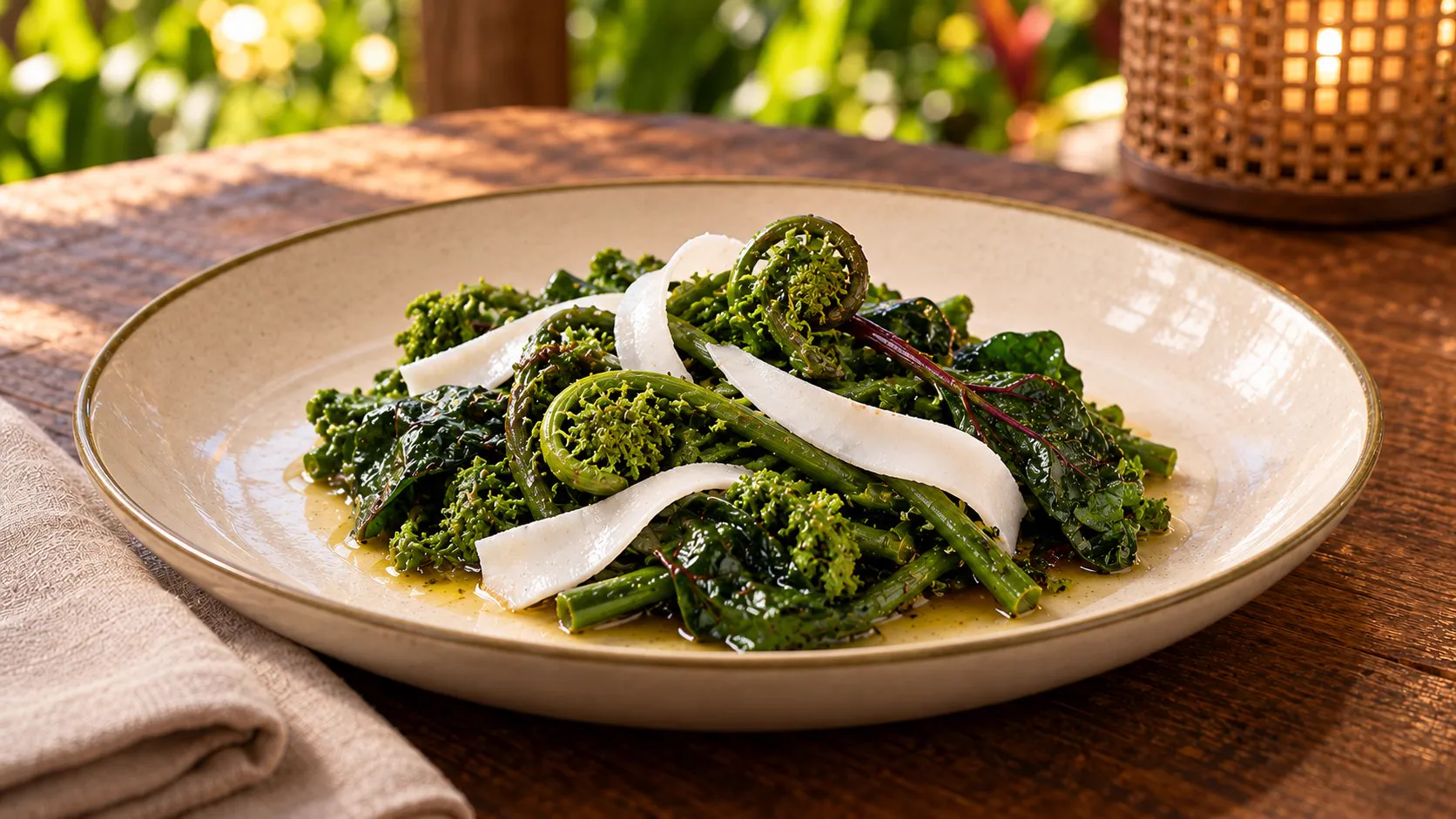
Warm pako and alugbati
The fiddleheads you saw by the pond this morning, now tender and bright green, tangled with alugbati and ribbons of young coconut in a bright calamansi dressing.
Continue the calamansi cooler or sparkling pour.
Down to the pond
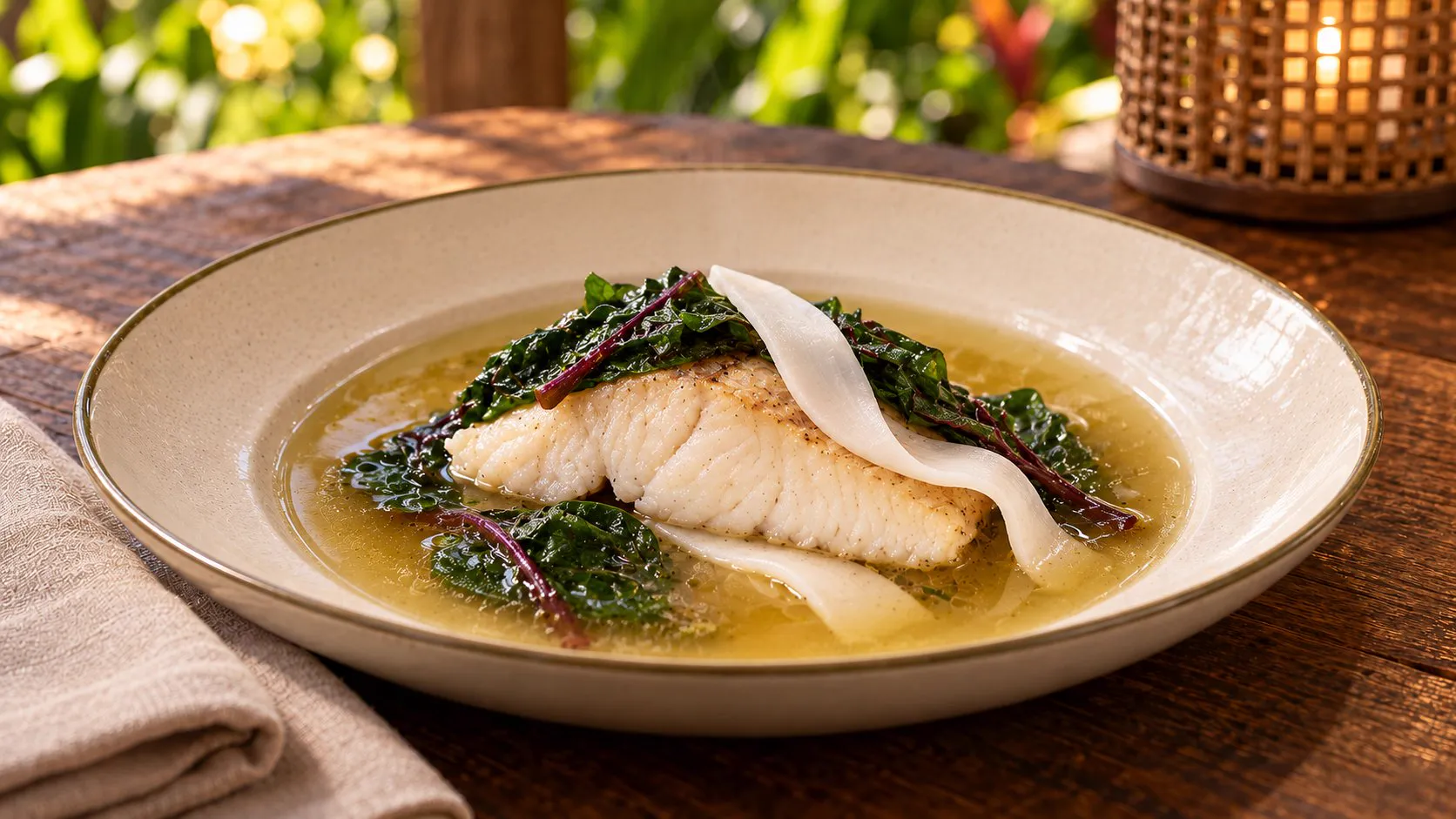
A clear, sour broth
Gently poached tilapia in a clear broth soured with batuan, the beloved souring fruit of Visayan home cooking, with young coconut and alugbati. Clean, bright and deeply comforting.
Young coconut water or dry Chenin Blanc.
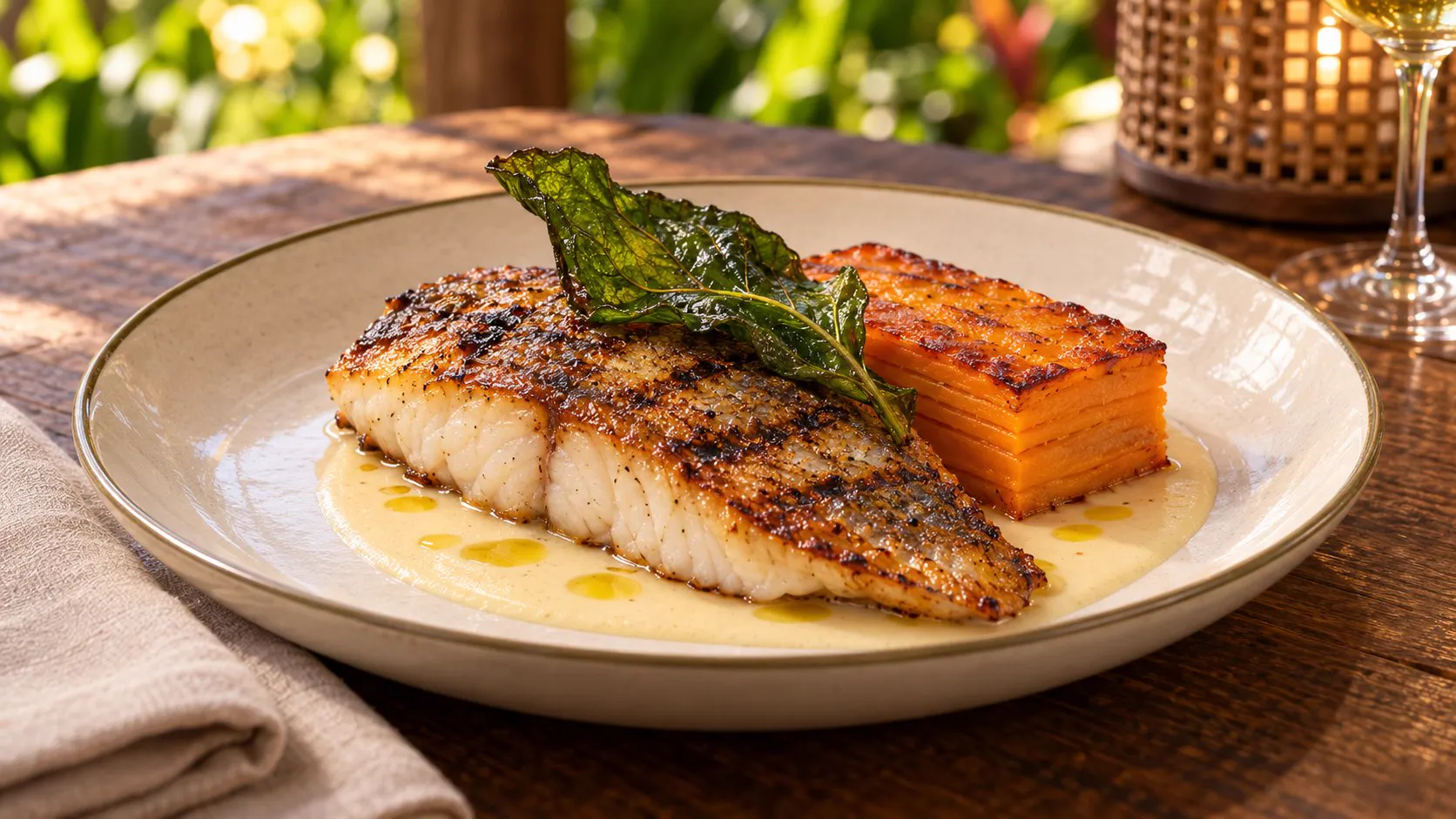
The heart of the meal
Pond tilapia grilled over coals until the skin crackles, beside a neat layered pavé of orange kamote, a silky calamansi-coconut emulsion and a crisp, glassy kamote leaf.
Bignay cooler or dry Chenin Blanc.
A pause, then dusk
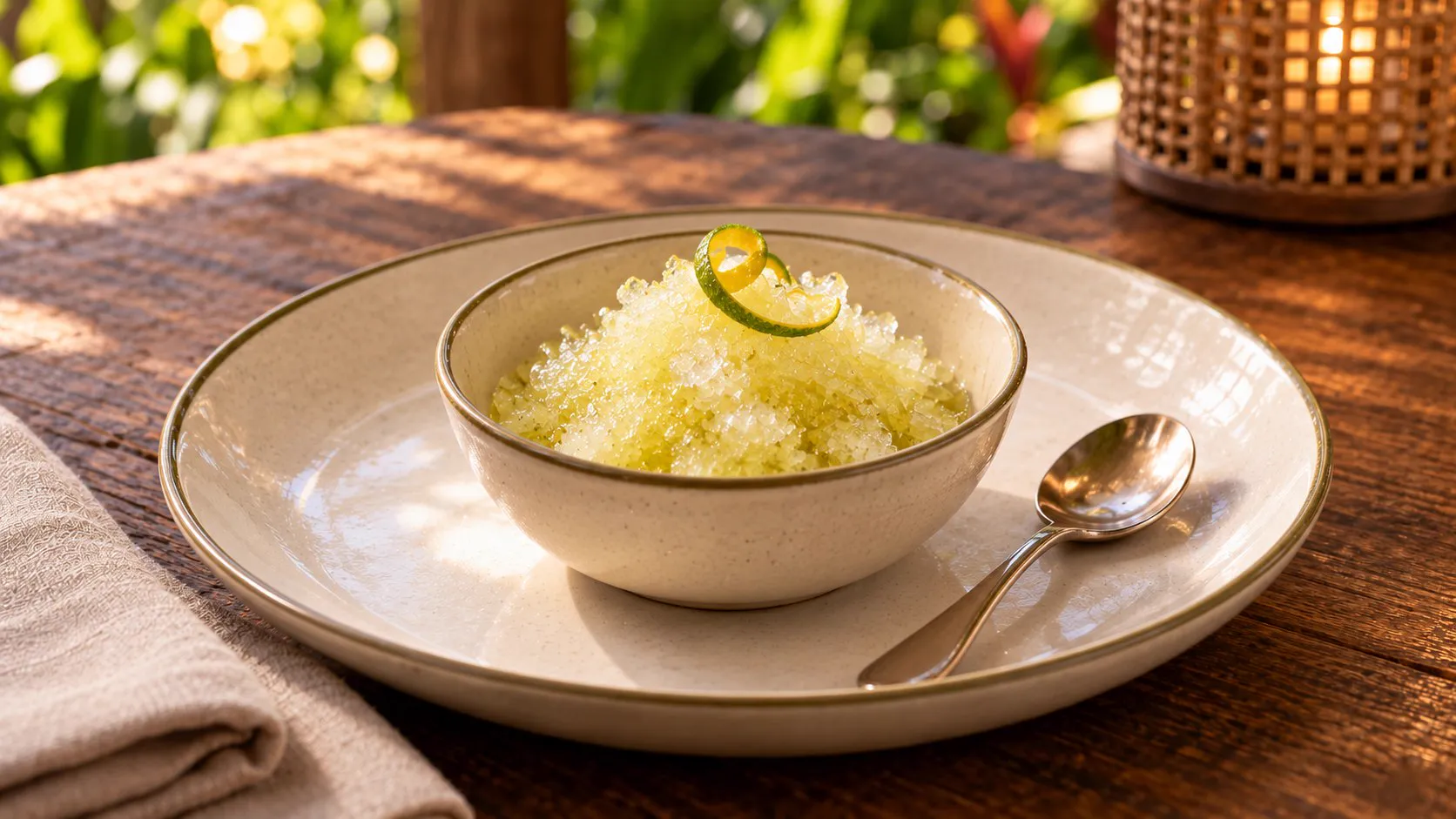
An icy breath of citrus
Calamansi and coconut-water granita, shaved like fresh snow. A cool, sparkling pause between the savory courses and the sweet finish.
Served with chilled water.
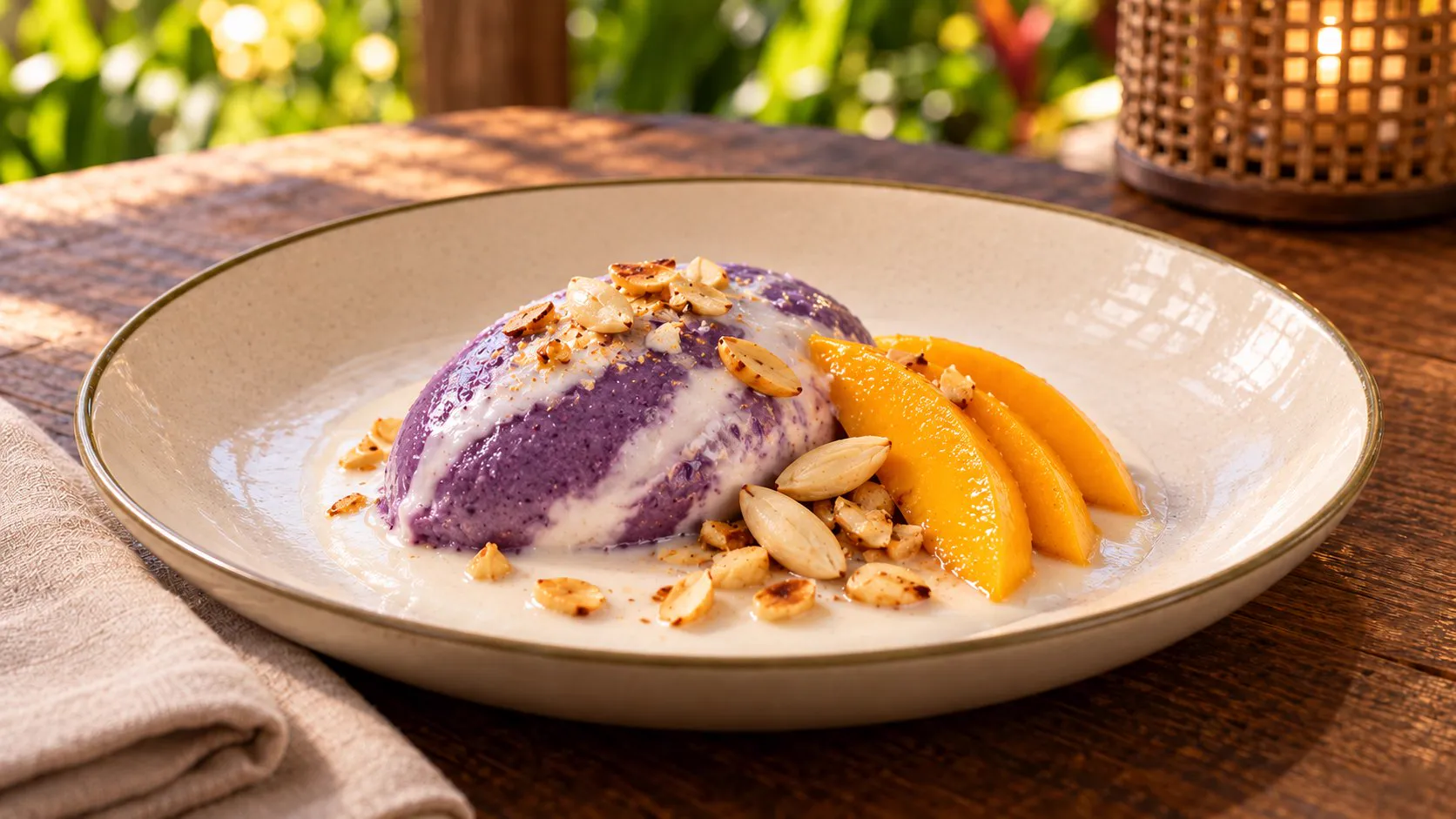
Purple, gold and toasted
Velvety ube-coconut crème in the color of the evening sky, with ripe mango and a crunch of toasted pili. The whole farm on one spoon.
Mango-coconut nectar or late-harvest Riesling.
Leticia’s Calamansi Margarita
The house signature
Farm calamansi, blanco tequila, orange liqueur and a touch of cane syrup, served over ice with a half-salt rim, so every sip can be as salty or as bright as you like. Tart, floral and bright with farm calamansi, it tastes like the orchard at golden hour.

The seasonal lychee
The day the first lychees ripen in the trial orchard, the kitchen celebrates. The signature margarita gains fresh farm lychee: perfumed, juicy and gone as soon as the harvest is. A reason to come back every season.
A farm that gives back
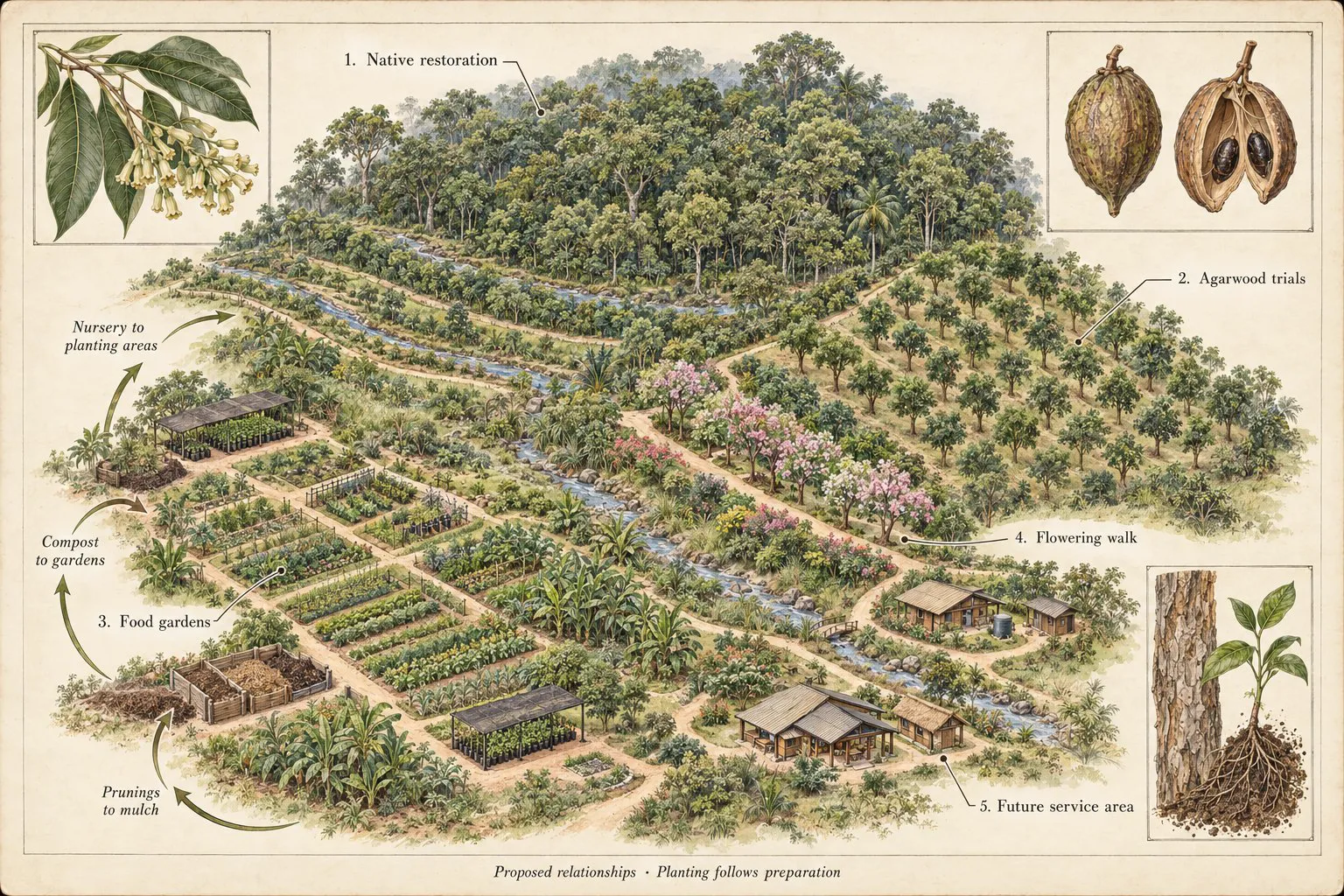
Everything here comes back around. Seedlings from the nursery become new forest. Kitchen scraps become compost for the food gardens. Prunings become mulch that keeps the soil cool and alive.
Trees mixed with crops hold carbon in their wood, keep soil and rain on the slopes below Banahaw, and give the birds, bats and butterflies of the native forest a home. Philippine law celebrates exactly this kind of place: the Farm Tourism Development Act of 2016 pairs farm visits with learning, so guests discover sustainable farming while local families gain good work.
A new love for Philippine plants, a few simple habits for living lightly, and the knowledge that one farm in Tayabas is helping rare Philippine plants thrive for the next generation.
Hanggang sa muli, and come home soon
The car doors close again, and the quiet returns.
In the back seat sits a paper bag of roasted pili and a young orchid in a basket. On your hands is a faint trace of agarwood. On your tongue, a handful of names to treasure: tayabak, waling-waling, pako, rimas, narra.
As the headlights swing toward the road, the lanterns of Leticia’s Kitchen glow behind you through the trees. You already know which season you want to come back for.
This is Lupang Pinagpala. The blessed land, waiting for its first guests.